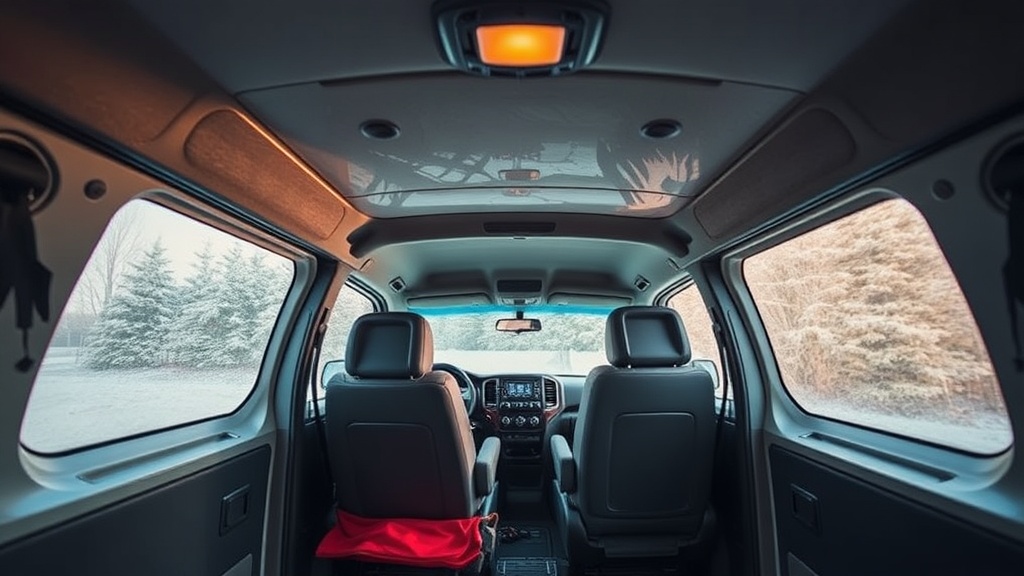
6 Ways to Keep Your Van Interior Cool Without AC

Maximize Your MaxxAir Fan Usage
Install Custom Window Reflective Shades
The Importance of Cross-Ventilation
Use Blackout Curtains Strategically
Monitor Humidity with a Hygrometer
Optimize Your Parking Position
This guide provides six practical, low-cost methods to lower the temperature inside your van or camper van without relying on an expensive air conditioning unit. You will learn how to manage solar heat gain, optimize airflow, and use evaporation techniques to maintain a livable environment during hot summer road trips.
1. Use Reflective Window Insulators
The primary source of heat in a van is solar radiation entering through the glass. Standard window tints help, but they do not stop the heat from building up inside the cabin. To effectively block thermal energy, you need to use reflective insulation that creates a barrier between the sun and your interior.
The most effective tool for this is a custom-cut reflective material, often referred to as "Reflectix." While you can buy generic rolls, the best way to use it is to cut pieces that fit the exact shape of your van's windows. When these are pressed against the glass, they reflect a significant portion of the infrared light back outside before it can heat your upholstery or cabinetry.
Implementation Tips:
- Blackout Fit: Ensure the insulation covers the entire window frame. Even small gaps allow light and heat to bleed in.
- Avoid Direct Contact: If possible, leave a tiny air gap between the glass and the insulator to prevent heat transfer via conduction.
- The "Dark Side" Rule: Always ensure the silver, reflective side is facing outward toward the sun. If the dark side faces the sun, it will absorb heat and radiate it into your van.
Using these insulators is a critical part of your setup. If you find your electrical systems are struggling due to high heat or heavy appliance use, you may want to read more about why your battery is dying faster than expected, as heat can also impact battery efficiency and lifespan.
2. Optimize Cross-Ventilation with High-Efficiency Fans
Simply opening a window is rarely enough to move the stagnant, hot air trapped in the upper corners of a van. To create a true breeze, you must establish a cross-ventilation system that forces hot air out and pulls cooler air in. This is best achieved using a combination of roof vents and side windows.
A high-quality roof vent fan, such as a MaxxAir Fan, is the industry standard for van life. Unlike standard vents, these fans are capable of running both in "intake" and "exhaust" modes. During the hottest part of the day, set your roof fan to exhaust. This pulls the hottest air—which naturally rises to the ceiling—up and out of the vehicle. Simultaneously, open a window on the shady side of the van to allow a fresh stream of air to replace it.
Effective Fan Placement:
- The Exhaust Strategy: Position your roof fan toward the front or center of the van and your window openings toward the rear. This creates a directional flow that sweeps air across your sleeping or sitting area.
- The Night Flush: When temperatures drop at night, run the fan on high to flush out the heat accumulated during the day.
- The Venturi Effect: If you are parked near a breeze, position your windows so the wind enters one side and is sucked out through the roof vent.
3. Manage Thermal Mass and Internal Heat Sources
Heat isn't just coming from the sun; it is also generated by the objects and activities inside your van. Every time you use an appliance or cook a meal, you are adding thermal energy to a small, enclosed space. Managing your "internal heat load" is just as important as blocking external sunlight.
Cooking is one of the biggest culprits. Using a gas stove inside a van can raise the temperature by several degrees in minutes. To combat this, try to do as much cooking as possible outside the vehicle. If you must cook inside, use a single-burner butane stove with a lid to contain heat, or rely on no-cook meals like salads or wraps during peak heat hours.
Heat-Reducing Habits:
- Electronics Management: Laptops, tablets, and even large power banks generate heat. Keep these in shaded areas or even in a small insulated bag to prevent them from heating up your workspace.
- Limit High-Draw Appliances: Using a 12V fridge or a heavy-duty power inverter generates heat from the motor and the electrical resistance. Ensure your fridge has plenty of breathing room around the vents to dissipate heat efficiently.
- Bedding Choices: Swap heavy wool or synthetic blankets for linen or lightweight cotton sheets. Synthetic fabrics trap body heat, making your sleeping area feel significantly warmer.
4. Utilize Evaporative Cooling Techniques
Evaporative cooling is an ancient method of lowering temperature by using the physics of water evaporation. As water turns from a liquid to a gas, it consumes heat energy from the surrounding air, effectively cooling the environment. While this works best in low-humidity environments, it can be a lifesaver in dry climates like the high deserts of Utah or Arizona.
A simple way to use this is the "wet towel method." Hang a damp (not dripping) towel over an open window or in front of a running fan. As the air passes through the damp fabric, the evaporation process cools the air stream before it reaches you. This is a low-tech, highly effective way to get relief during a midday heat spike.
Advanced Evaporative Tips:
- The Spray Bottle Method: Keep a fine-mist spray bottle of water handy. A light misting of your skin followed by a breeze from a handheld fan or a small USB fan can provide instant relief.
- Humidity Awareness: Be careful using this method in high-humidity areas like the Southeast US. In high humidity, evaporation slows down, and you may simply end up making the interior of your van feel "muggy" rather than cool.
5. Strategic Parking and Shade Management
Where you park your van can determine whether you spend the day in a comfortable cabin or a mobile sauna. Seeking shade is the most effective way to prevent your van's metal skin from absorbing solar radiation.
When scouting for a campsite or a rest stop, look for more than just a flat surface. A spot under a large deciduous tree is ideal because the leaves provide shade and undergo transpiration, which naturally cools the air around them. However, avoid parking under trees that drop heavy debris or sap, which can clog your roof vents or damage your window covers.
Parking Strategies:
- The North Side Advantage: If you are parking near a large structure or a rock wall, park so that the shadow falls directly over your vehicle.
- Avoid Asphalt: Parking on blacktop or asphalt will significantly increase the ambient temperature around your van, as these surfaces absorb and radiate massive amounts of heat. Whenever possible, choose grass or gravel surfaces.
- Pre-emptive Shading: If you know you will be parked in a sunny spot for several hours, set up your window covers before the sun reaches its peak. It is much harder to cool down a hot van than it is to keep a cool van from heating up.
6. Utilize Ground Temperature and Shade Canopies
The ground beneath your van acts as a heat sink. If you are parked on a hot desert floor, that heat will eventually radiate upward through the floor of your vehicle. To mitigate this, you can use external shade structures to create a "microclimate" around your van.
A heavy-duty canvas tarp or a specialized waynet shade can be rigged up to create a secondary roof over your vehicle. By suspending a tarp a few feet above the van, you create a pocket of shaded air. This air gap acts as an insulator, preventing the direct sun from hitting the van's roof, which is often the hottest part of the vehicle. This is a common tactic used by long-term travelers in places like Death Valley or the Mojave Desert.
Setting Up a Shade Canopy:
- Height Matters: Do not drape the tarp directly onto the van roof. You need an air gap (at least 12–18 inches) to allow air to circulate and carry heat away.
- Wind Resistance: Ensure your canopy is heavily weighted or anchored. A sudden summer gust can turn a shade tarp into a sail, potentially damaging your van or your setup.
- Color Choice: Use light-colored materials like white or silver for your canopy. Dark colors will absorb heat, defeating the purpose of the shade.