Finding Free Dispersed Camping on Public Lands: A Complete Guide

There's Something Different About a Campfire You Built Miles from Anyone Else
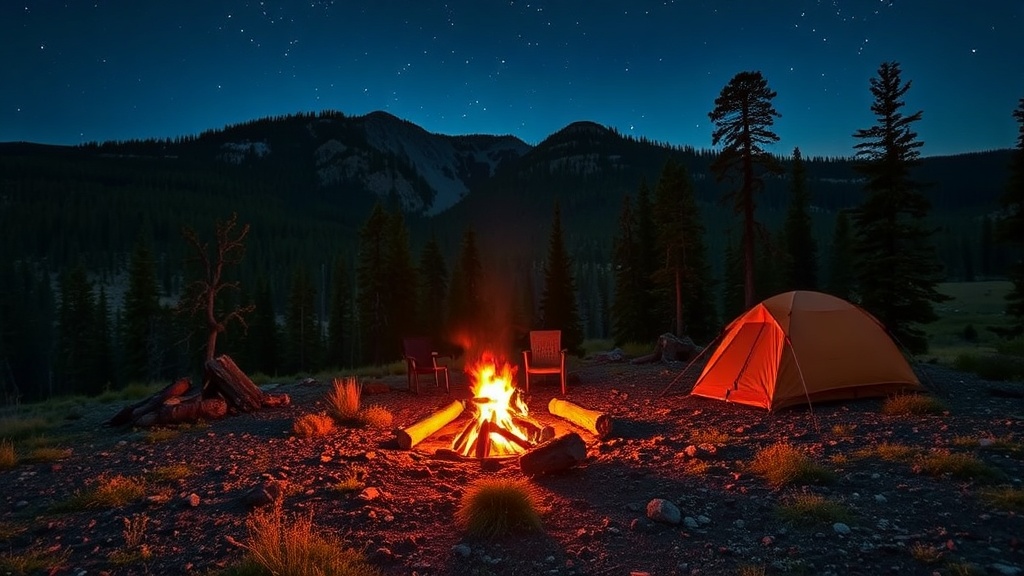
After eight years of running Friday night campfire sessions at Camp Lutherock, I thought I knew everything there was to know about building a fire. I was wrong. The first time I lit a match at a dispersed campsite on BLM land outside Moab—with no bathroom, no picnic table, no neighbor's generator humming through the night—I understood what I'd been missing. This was the campfire in its original form. No designated ring required. No reservation system. Just you, the land, and the ancient agreement between humans and flame that predates every campground amenity ever built.
Dispersed camping isn't glamorous. You won't find electrical hookups or coin-operated showers. What you will find is solitude, starlight unspoiled by parking lot flood lamps, and the particular satisfaction of knowing you earned your spot through research and effort rather than a credit card transaction. This guide covers everything I wish someone had explained to me before my first dispersed camping trip—the practical logistics, the legal boundaries, and the unwritten rules that keep these places wild for the next traveler.
Understanding Dispersed Camping: The Basics
Dispersed camping means setting up camp outside of designated campgrounds on public land. It's free, first-come-first-served, and available across millions of acres in the United States. The trade-off? You're on your own for water, waste management, and navigation. No ranger station will point you to your site. No camp host will remind you about quiet hours. This is camping as self-sufficient recreation.
The practice is legal on most Bureau of Land Management (BLM) territory and in National Forests, with specific restrictions that vary by location. National Parks generally prohibit dispersed camping except in designated backcountry zones requiring permits. Wildlife Management Areas, state trust lands, and military installations each carry their own regulations—never assume the rules are consistent across jurisdictions.
Know Your Public Lands
Bureau of Land Management (BLM)
The BLM manages 245 million acres, primarily across the Western states. These lands are your best bet for dispersed camping in places like Utah, Arizona, Colorado, and Nevada. Most BLM territory allows camping for up to 14 days within any 28-day period at a single location. After that, you must relocate at least 25 miles away. The 25-mile rule exists specifically to prevent semi-permanent occupation of popular spots.
BLM land is often characterized by wide-open desert, sagebrush steppe, and high-elevation mountain terrain. Road quality varies from graded gravel to routes requiring high-clearance 4WD. Always check current conditions before committing to a remote road—flash floods and seasonal closures can transform accessible routes into impassable obstacles.
National Forests
Managed by the U.S. Forest Service, National Forests blanket 193 million acres across the country. Dispersed camping rules here tend to be slightly more restrictive than BLM guidelines. Most forests require campsites to be located at least 100 feet from lakes, streams, and trails. The 14-day limit applies, though some high-use areas impose shorter windows.
National Forests offer distinct advantages: established road networks, often reliable water sources (with proper treatment), and generally milder weather than desert BLM territory. The eastern United States relies heavily on National Forests for dispersed camping opportunities, as BLM presence drops off dramatically east of the Rocky Mountains.
Other Designations
National Grasslands, managed by the Forest Service, follow similar rules to National Forests. Wildlife Management Areas typically prohibit camping or require special permits—check state regulations carefully. National Recreation Areas and National Monuments vary widely; some welcome dispersed camping while others restrict activity to designated sites.
Finding Your Spot: Tools and Techniques
Digital Mapping Resources
FreeRoam and iOverlander serve as community-driven databases of vetted dispersed campsites. These apps display GPS coordinates, cell signal strength reports, and recent condition updates from other travelers. I cross-reference multiple entries—what one reviewer calls "secluded," another might describe as "right off the highway."
Gaia GPS and OnX Offroad provide layer overlays showing land ownership boundaries. This matters because maps rarely distinguish between BLM, Forest Service, state, and private land at the scale you need for site selection. Download offline maps before departure. Cell service at viable dispersed sites ranges from "spotty" to "nonexistent."
The Motor Vehicle Use Maps (MVUMs) published by the Forest Service represent the authoritative source for which roads are legally open to vehicles. These maps mark dispersed camping areas with small dots along approved routes. MVUMs are free, annually updated, and available through Forest Service district offices or their websites.
Satellite Reconnaissance
Google Earth and Google Maps satellite view reveal what topographic maps cannot: clearings large enough for vehicle turnaround, fire rings left by previous campers (indicating established sites), and terrain roughness that might challenge low-clearance vehicles. Look for flat areas adjacent to established roads, typically marked by subtle color changes in vegetation or bare soil patches.
The Art of Ground-Truthing
Digital research gets you close; actual exploration finds the site. Arrive with several hours of daylight remaining. Drive past your target coordinates, scanning for level ground, existing fire rings, and natural windbreaks. Established dispersed sites—those showing repeated use—often provide the most sustainable option. Creating a completely new campsite damages vegetation and contributes to land management restrictions.
When evaluating a potential spot, consider:
- Solar exposure: Will morning sun help thaw your vehicle, or will afternoon heat make the site unbearable?
- Drainage: Avoid washes, low points, and areas showing water flow patterns. A dry arroyo can become a dangerous torrent during distant thunderstorms.
- Exit strategy: Can you turn around without backing into uncertain terrain? Is the road passable after rain?
- Proximity to resources: How far to the nearest water source, trailhead, or town for emergencies?
Rules, Regulations, and the Fine Print
Every dispersed camper needs to internalize the 14-day rule. Exceeding stay limits doesn't just risk a fine—it contributes to the cumulative impact that eventually leads to area closures. Rangers do patrol remote roads, and they notice vehicles that haven't moved.
Fire restrictions change seasonally and sometimes daily based on conditions. Before lighting any fire, check the current fire danger level through the relevant agency website or a local ranger station. Many dispersed areas implement stage-one restrictions (no open fires outside designated rings) or stage-two restrictions (no open flames whatsoever, including camp stoves) during dry periods. Violating fire restrictions carries federal penalties and civil liability for suppression costs.
Permits occasionally apply even to dispersed camping. The Oregon Department of Forestry requires permits for camping on state forestland. Arizona's state trust land requires a recreation permit. California's dispersed camping regulations vary by forest and sometimes by specific watershed. When in doubt, call the local ranger district. They answer these questions daily.
"The best dispersed campsites are the ones nobody talks about online. If you find a place with an established fire ring, minimal trash, and no obvious social media trail, treat it like a secret. Geographic tagging destroys the solitude that makes these places special."
Gear and Preparation
Dispersed camping demands self-sufficiency. Without campground infrastructure, you become your own facilities manager.
Water: Carry more than you think necessary—minimum one gallon per person per day, plus additional for dishwashing and hygiene. I carry a 7-gallon rigid container plus backup filtration for sourcing from natural water when necessary. Never assume seasonal streams are flowing. Never drink untreated surface water.
Waste management: Pack out everything, including toilet paper. A five-gallon bucket with a toilet seat lid and compostable bags serves as a portable toilet system. Bury human waste in catholes 6-8 inches deep, at least 200 feet from water, trails, and camp. Some high-use dispersed areas now require wag bags (portable toilet systems) due to cumulative sanitation impacts—check local regulations.
Power and communication: A solar panel or substantial battery bank becomes essential for multi-day stays. A satellite communicator (Garmin inReach, Zoleo, or Spot) provides emergency contact capability where cell towers don't reach. These devices offer peace of mind that justifies their subscription costs.
Recovery gear: If you're driving to dispersed sites, carry traction boards, a shovel, and a tow strap. Soft sand, mud, and snow have stranded more experienced drivers than care to admit. Know your vehicle's ground clearance and four-wheel-drive capabilities before attempting questionable roads.
Leave No Trace: The Non-Negotiables
The future of dispersed camping depends entirely on current behavior. Land managers don't close areas because they dislike camping; they close areas because they find toilet paper blooming in the sagebrush, abandoned gear, and fire scars outside established rings.
- Camp on durable surfaces: Established sites, bare rock, or dry grass. Avoid cryptobiotic soil crusts (the lumpy, dark biological soil common in desert regions)—these take decades to recover from a single footprint.
- Dispose of waste properly: Pack it in, pack it out. This includes food scraps, which attract wildlife and disrupt natural foraging patterns.
- Leave what you find: Firewood collection is often prohibited. Check local rules—many areas require firewood to be purchased within a specific radius to prevent invasive insect spread.
- Minimize campfire impacts: Use established fire rings. If building a new fire (only where legal), keep it small, use dead and downed wood only, and disperse the ashes completely after ensuring the fire is cold to touch.
- Respect wildlife: Store food in hard-sided containers or hung appropriately for the region's wildlife (bears, rodents, ravens).
- Be considerate of other visitors: Sound carries across open landscapes. Generator use, in particular, destroys the wilderness experience that draws people to dispersed camping.
Safety Considerations
Dispersed camping removes the safety net of nearby campers and regular ranger patrols. Share your itinerary with someone reliable, including GPS coordinates of your planned area. Carry a comprehensive first aid kit and know how to use it—professional medical help may be hours away.
Weather awareness matters more without shelter options. Lightning in open terrain poses serious risk; identify low-risk zones (uniform stands of shorter trees, avoiding ridge lines and isolated tall trees) before storms arrive. Flash floods in canyon country can arrive without local rainfall—monitor upstream weather obsessively.
Wildlife encounters require preparation. Store scented items properly. Make noise when moving through dense vegetation. Carry bear spray in grizzly country and know how to deploy it. Maintain situational awareness—distracted wandering causes most negative wildlife interactions.
The Payoff
There's a particular moment I chase now, one that no developed campground has replicated. It happens about an hour after sunset, when the fire has burned down to coals and the Milky Way has emerged in full. The silence isn't just an absence of noise—it's a presence, a weight, something you can feel against your eardrums. That silence, that darkness, that particular quality of being alone in a landscape that doesn't care about your deadlines or your notifications—that's what dispersed camping offers.
The logistics matter. The preparation matters. The rules absolutely matter. But they serve a larger purpose: preserving access to an experience that connects us to something older and more enduring than our constructed environments. Build your skills. Do your research. Tread lightly. Then find your own fire ring somewhere beyond the pavement, and discover what you've been missing.