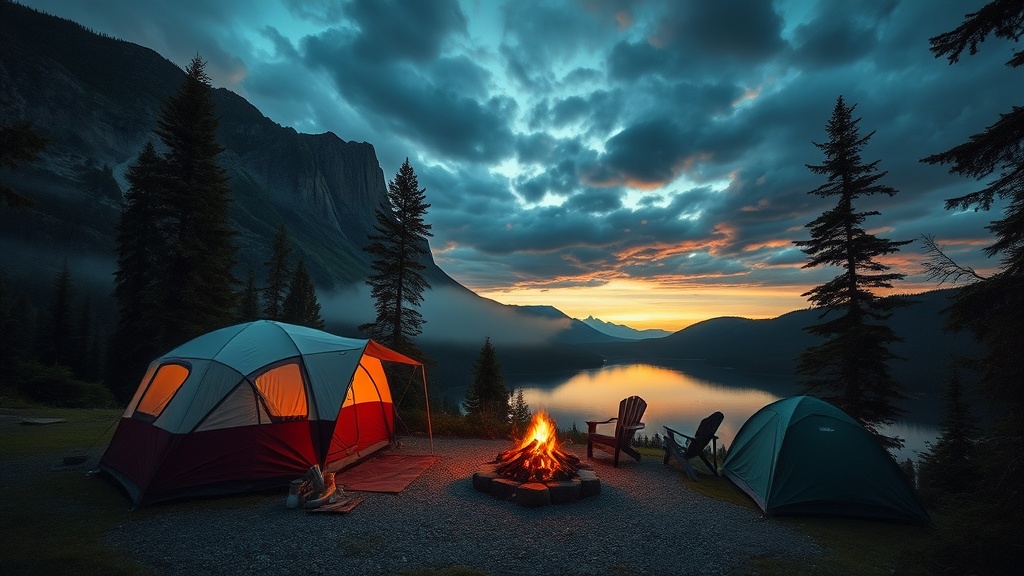
Hidden Gem Campgrounds Across Canada You Need to Visit

This guide maps out ten lesser-known campgrounds from British Columbia to Newfoundland where the sites aren't crammed together and the night skies still go dark. You'll find specific recommendations for booking windows, the best sites at each location, and what gear actually matters when you're hours from the nearest gear shop. Whether you're planning a cross-country van trip or just want a quiet weekend away from the Instagram crowds, these spots deliver something the big parks lost years ago—room to breathe.
What Are the Best Hidden Campgrounds in British Columbia?
The best hidden campgrounds in BC aren't on the Icefields Parkway. They're scattered up logging roads and tucked behind reservoir lakes where cell service flatlines. Little Elbow Campground in Kananaskis sits two hours west of Calgary but feels like a secret. The sites sit along the Elbow River—sites 24 through 31 have the best water access—and the hiking trail to Elbow Lake starts right from the parking lot. You'll want the Kanananaskis Conservation Pass before you go; they check.
Further west, Murbau Lake Provincial Park on Vancouver Island requires a rough 16-kilometer logging road commitment. The catch? You might have the entire lake to yourself. The campground has just 12 sites, no reservations, and the trout fishing runs consistent through August. Bring bug spray—the mosquitoes here don't mess around.
Where Can You Camp in Alberta Without the Crowds?
You can camp without crowds at Crimson Lake Provincial Park or Gregoire Lake Provincial Park—both within striking distance of Edmonton but ignored by the Banff-bound highway traffic. Crimson Lake sits 30 minutes west of Rocky Mountain House. The lakeside sites (A-loop, numbers 1-18) book up fast, but the B-loop forest sites offer better wind protection and more privacy between tents.
Gregoire Lake—about an hour south of Fort McMurray—catches people off guard. It's boreal forest camping with sandy beaches and surprisingly warm water come July. The campground reopened fully in 2022 after wildfire damage, so the facilities are newer than most provincial parks. Worth noting: the fishing here is excellent for walleye and pike, but you'll need an Alberta sportfishing license.
"The best Alberta campsites aren't the ones with the mountain backdrops everyone recognizes. They're the ones where you hear loons instead of generators."
For something completely different, Writing-on-Stone Provincial Park down south delivers desert badlands camping along the Milk River. The hoodoos light up at sunset. The river runs shallow and warm—perfect for floating on an air mattress with a beverage. Site 72 has the best view of the rock formations, though you'll sacrifice some shade.
Which Saskatchewan and Manitoba Campgrounds Are Actually Worth the Drive?
Saskatchewan's Cypress Hills Interprovincial Park justifies every kilometer of the drive from Regina. The park straddles the Alberta border at 1,400 meters elevation—higher than Banff townsite—creating a weird pocket of mountain-like forest in the middle of prairie country. The Reesor Lake Campground offers 25 sites with genuine privacy; site 14 backs onto the lake itself.
Manitoba's hidden gem sits way north at Pisew Falls Provincial Park. The campground is small—just 20 sites—but the waterfall access trail starts right from the parking lot. The falls freeze solid in winter (ice climbing happens here), but summer brings black bears to the berry thickets. Store food properly. The Kwasitchewan Falls trail—an 18-kilometer round trip—starts here and ranks among the best hikes in the province.
| Campground | Province | Sites | Best Feature | Booking Window |
|---|---|---|---|---|
| Little Elbow | Alberta | 35 | River access, hiking | 90 days ahead |
| Murbau Lake | British Columbia | 12 | First-come solitude | No reservations |
| Crimson Lake | Alberta | 85 | Quiet lake swimming | Season opener |
| Cypress Hills (Reesor) | Saskatchewan | 25 | Mountain vibes, prairie location | First-come preferred |
| Pisew Falls | Manitoba | 20 | Waterfall trailhead | No reservations |
| Grundy Lake | Ontario | 194 | Caribbean-blue water | 5 months ahead |
| Parc national du Bic | Quebec | 37 | Seal colonies at sunrise | SEPAQ website |
| Kejimkujik (Jeremy's Bay) | Nova Scotia | 360 | Dark Sky Preserve | Parks Canada |
| New River Beach | New Brunswick | 97 | Tidal beachcombing | Provincial parks site |
| Gros Morne (Berry Hill) | Newfoundland | 88 | Fjord views, tablelands nearby | Parks Canada |
What Ontario and Quebec Campgrounds Do Locals Actually Use?
Ontario locals know that Algonquin Provincial Park—while gorgeous—requires reservations six months out and still lands you beside a generator-running RV. The insiders head to Grundy Lake Provincial Park instead. Two hours north of Sudbury, Grundy delivers water so turquoise it looks filtered. The catch? The swimming beaches are rockier than southern Ontario parks. Bring water shoes.
The park operates on a first-come, first-served system for about half its sites. Arrive Tuesday or Wednesday for the best selection. Site 401 in the White Birch section sits on a point with 270-degree water views—it's the one locals race for when the gates open.
In Quebec, Parc national du Bic down near Rimouski offers something you won't find elsewhere: harbor seals. The best viewing happens at low tide from the Pointe-aux-Épinettes trail. The campground's Rioux section has the newer facilities, but the Anse-aux-Coques loop puts you closer to the seal colonies. The SEPAQ booking system opens in January for summer dates—don't sleep on it.
Here's the thing about Quebec provincial parks: they're stricter than Ontario about quiet hours and alcohol. The tradeoff is immaculate facilities and actual enforcement of the rules. The showers at Bic have hot water and pressure—rarer than you'd think in provincial camping.
Which Atlantic Canada Campgrounds Offer Something Special?
Kejimkujik National Park in Nova Scotia holds Dark Sky Preserve status—the only national park in Canada with that designation for its entire area. The Jeremy's Bay Campground fills up for the Perseid meteor shower in August, but September offers darker skies and zero bugs. Site 23 in the Jim Charles Loop has the best tree coverage for afternoon shade and an open sightline east for sunrise.
New Brunswick's New River Beach Provincial Park gets overlooked because it's not Fundy National Park. That said, the tidal range here—up to 8 meters—creates world-class beachcombing at low tide. The campsites sit back from the water in a spruce-fir forest that smells like a Christmas tree farm. Sites 41-48 in the upper loop have the best drainage if it rains; the lower loop can get soggy.
Newfoundland's Gros Morne National Park needs no introduction for hikers, but the Berry Hill Campground specifically deserves attention. It's the closest campground to the Tablelands—the weird orange rock desert where the earth's mantle actually pokes through the crust. The sites aren't fancy (pit toilets in some loops), but you're camping beneath fjords. Site 47 looks directly at the water. Bring layers—the wind off the Gulf of St. Lawrence doesn't care what season it is.
What Gear Actually Matters at Remote Campgrounds?
Remote campgrounds share one trait: you can't run to Canadian Tire when you forget something. A Yeti Tundra 65 or similar rotomolded cooler keeps ice for five days—key when the nearest grocery store is a 90-minute drive. The MSR Hubba Hubba NX tent handles the wind that whips across prairie and coastal sites better than budget alternatives.
For cooking, the Camp Chef Everest 2x two-burner stove puts out 20,000 BTU per burner—enough to boil water fast when the temperature drops unexpectedly. Pair it with a Lodge 12-inch cast iron skillet (seasoned before you leave, obviously) and you can cook anything you'd make at home.
Water filtration matters more at these spots. The Grayl Geopress purifier handles bacteria, viruses, and particulates in one press—useful when the only water source is a lake or the campground pump is acting up. Worth noting: many remote campgrounds have "boil water" advisories at least part of the season.
Satellite communication—either a Garmin inReach Mini or Spot X—makes sense when you're beyond cell range. The subscription hurts, but being able to text for help when the transmission goes or someone twists an ankle on a trail? That's the kind of insurance you hope to never use.
Final Thoughts on Timing and Booking
The best hidden gems aren't secret anymore—they're just harder to book. Parks Canada reservations open in January for the summer season. British Columbia's Discover Camping system crashes every year at release time (have backup dates ready). Ontario's system runs 5 months out, rolling, which means you need to calculate your target date backward.
That said, cancellations happen. Check back weekly. The Tuesday morning drop—when people cancel to avoid penalty fees—often releases the best sites. Persistence pays.
Campfire culture lives strongest at these edges of the map. The stories you collect—watching seals surface at dawn, hearing wolves somewhere past the treeline, seeing the Milky Way thick as spilled paint—those happen when you get away from the crowds. Pick a spot. Book the time. Go.