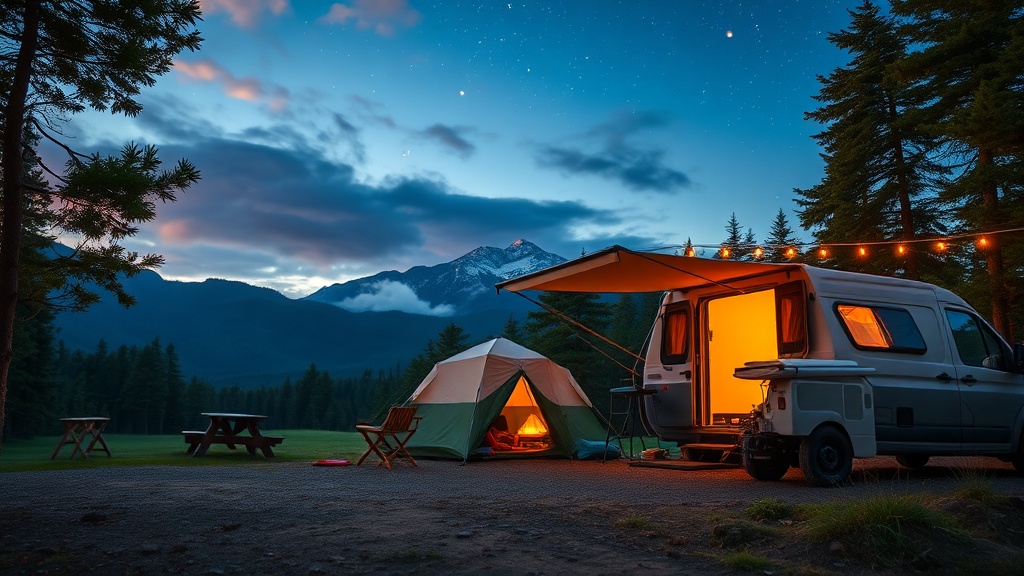
How to Choose and Book the Perfect Campsite Every Time

Choosing the right campsite can make or break an outdoor adventure. This guide covers everything from understanding reservation systems and evaluating campground amenities to timing strategies that land prime spots at popular destinations. Whether planning a weekend getaway or a cross-country road trip, these practical steps ensure every campsite reservation delivers exactly what the trip demands.
When Should Reservations Be Made?
The sweet spot for booking depends entirely on where and when the trip happens. National parks like Yosemite or Zion release sites six months out — sometimes earlier for peak summer dates — and the best spots vanish within minutes. That said, you don't always need to plan half a year ahead.
State parks typically open reservations 3-6 months in advance. Provincial parks in Canada (think Algonquin or Jasper) follow similar timelines. Private campgrounds like KOA or Jellystone Parks often accept bookings up to a year out but maintain more flexibility with last-minute availability.
For shoulder season trips — late September through early November, or April to mid-May — booking windows shrink dramatically. Many campgrounds drop to first-come, first-served status outside peak summer months. Worth noting: some of the best fall foliage camping requires zero advance planning.
Here's a practical timeline reference:
| Campground Type | Peak Season Window | Shoulder/Off-Season |
|---|---|---|
| National Parks (recreation.gov) | 6 months out | 2-4 weeks or walk-up |
| State Parks | 3-6 months out | 1-2 weeks |
| Private Campgrounds (KOA, Good Sam) | Up to 1 year | Usually available |
| Forest Service / BLM | Varies by location | Often first-come, first-served |
What Reservation Platforms Actually Work Best?
Recreation.gov handles most federal campgrounds — national parks, forests, and corps of engineers sites. The interface isn't perfect (expect some clunky load times on release days), but it's the gateway to iconic spots like Glacier National Park's Many Glacier Campground or the Grand Canyon's North Rim.
For state parks, you'll encounter a fragmented system. ReserveAmerica covers roughly two dozen states. California runs its own ReserveCalifornia platform. Washington, Oregon, and Colorado maintain independent systems — each with its own quirks and mobile app limitations.
Private campgrounds increasingly handle bookings directly through their websites. The KOA app works well for their network of 500+ locations. Hipcamp (think Airbnb for camping) unlocks private land options — vineyards, farms, and rural properties with campsites you won't find elsewhere.
The catch? Each platform has different cancellation policies. Recreation.gov generally offers full refunds minus a $10 cancellation fee if done 48+ hours ahead. Some state park systems charge steeper penalties — California takes the entire reservation fee if cancelled within 48 hours of arrival.
How Do You Evaluate a Campsite Before Booking?
Not all sites within the same campground are equal. Site photos help, but they're often staged during perfect lighting with no neighbors visible. Dig deeper.
Start with Campendium or The Dyrt — user-submitted photos reveal the reality: how close that RV pad sits to the bathroom, whether the "lake view" requires binoculars, if the fire ring sits on a slope. Look for reviews mentioning noise levels, shade coverage, and proximity to busy roads or trails.
Check the campground map carefully. Sites near dumpsters or shower houses see foot traffic at all hours. Sites on outer loops often offer more privacy. Pull-through sites suit larger RVs but sometimes sacrifice the wooded seclusion tent campers prefer.
Consider the sun's path. An eastern-facing site catches morning light — lovely for early risers, brutal for those hoping to sleep past 7 AM. Western exposures bake in afternoon heat. A site shaded by mature oaks or pines makes 85-degree afternoons bearable.
Amenities matter differently depending on the setup. A site with electric hookups (usually 30-amp or 50-amp) means air conditioning and charged devices. Water hookups eliminate tank management stress. Sewer connections at the site (versus dump stations) add convenience for longer stays — though you'll pay more for full hookups.
What's the Best Strategy for Snagging Hard-to-Get Sites?
Popular campgrounds release blocks of sites at specific times — often 8 AM or 10 AM Pacific Time. Set alarms. Create accounts beforehand. Have payment details saved.
For truly competitive destinations (Yosemite Valley, Watchman Campground at Zion, Many Glacier), the approach requires more finesse. Book six months to the day — that's when sites release. Have backup dates ready. Know your top three site preferences before the clock starts.
Consider the shoulder sites — the ones nobody wants. At Madison Campground in Yellowstone, sites near the generator zone see less demand but still offer the same geyser-country access. At Elkmont in Great Smoky Mountains, riverside sites book instantly; loop sites 100 yards back stay available for weeks.
Waitlists work on some platforms. Recreation.gov offers an "availability alert" feature — not quite a waitlist, but a notification system when cancellations occur. Savvy campers combine these alerts with frequent manual checking. Cancellations spike 7-14 days before arrival dates as trip plans solidify or crumble.
Here's the thing about walk-up camping: it isn't dead. Many campgrounds hold 10-30% of sites for same-day arrivals. Arrive early — really early, like 6 AM — with cash and flexibility. The NFS campgrounds (National Forest Service) along Colorado's Million Dollar Highway, Oregon's Cascade Lakes Highway, and California's Eastern Sierra operate this way successfully throughout summer.
Insider Tips from the Field
Download offline maps before arriving. Cell service dies precisely when needed most — at the campground entrance when confirmation numbers must load.
Bring leveling blocks (Lynx Levelers work well) even for tent sites. That perfect-looking site online often hides a subtle slope that sends sleeping bags sliding downhill by 2 AM.
Pack a site-marking strategy. Flagging tape or reflective guyline markers prevent midnight tripping hazards — especially important at walk-up sites arrived at in darkness.
Check fire restrictions before departure. The National Interagency Fire Center tracks current bans. Nothing dampens the campfire experience quite like discovering wood fires are prohibited after unpacking the s'mores ingredients.
"The best campsite isn't necessarily the one with the view — it's the one where you sleep well, cook comfortably, and wake up ready for whatever the trail offers."
How Much Should a Good Campsite Cost?
Expect to pay $20-35 per night for basic tent sites at national and state parks. Developed campgrounds with showers, flush toilets, and potable water hover around $30-50. Full hookup RV sites at private parks run $50-100+ depending on location — coastal California and Florida Keys demand premium rates.
Amenity fees add up. Extra vehicles ($5-10), pets (sometimes $2/night at state parks), and reservation fees ($8-10 per booking) inflate the base price. Some campgrounds charge for showers — quarters or tokens required. Others meter electricity at RV sites beyond the base rate.
Dispersed camping on BLM land or national forest roadways costs nothing — or nearly nothing (some areas require $5-10 permits or Adventure Pass-style passes). The trade-off? No amenities. Pack out everything. Dig catholes properly. Bring water filtration systems because streams aren't always safe.
Annual passes offer value for frequent campers. The America the Beautiful Pass ($80) covers entrance fees at national parks — though not camping fees. Some state park systems offer camping passes (Washington's Discover Pass, California's Regional Parks membership) that reduce nightly rates or eliminate day-use add-ons.
Choosing and booking campsites rewards those who plan deliberately but stay flexible. The perfect site exists for every trip — sometimes it's the one reserved six months ago with river frontage, sometimes it's the unexpected walk-up spot tucked against a granite wall nobody else noticed. Build the skills to evaluate options quickly, handle reservation systems smoothly, and adapt when plans shift. The campfire awaits.
Steps
- 1
Research and Compare Campground Options Based on Your Needs
- 2
Check Availability and Book at the Right Time
- 3
Evaluate Site-Specific Features and Amenities Before Confirming