How to Set Up the Ultimate Camp Kitchen: A Step-by-Step Guide

The Heart of Camp Life Begins at the Kitchen
After eight summers orchestrating Friday night campfire sessions at Camp Lutherock, I learned something fundamental: the magic doesn't start when the first match strikes. It begins hours earlier, when someone unpacks a cooler, unfolds a prep table, and transforms a patch of dirt into a functioning kitchen. I've watched teenagers who couldn't boil water at home become confident camp cooks, and I've seen seasoned road trippers turn meal prep into pure poetry. The difference? A deliberate, well-organized camp kitchen setup.
This isn't about owning the most expensive gear or replicating your kitchen at home. It's about creating a workspace that respects the rhythm of outdoor cooking—where efficiency meets the unexpected, and where every tool has earned its place in the limited real estate of your vehicle. Whether you're car camping for a weekend or embarking on a cross-country road trip, these steps will help you build a kitchen that serves you, not the other way around.
Step 1: Choose Your Kitchen Location Wisely
Before you unload a single pot, survey your site with the critical eye of a teacher arranging a classroom. The ideal camp kitchen sits 100 to 200 feet downwind from your tent—close enough for convenience, far enough that cooking odors don't attract curious wildlife to your sleeping area. Look for:
- Level ground: Slight drainage away from your cooking area prevents water from pooling if it rains
- Natural windbreaks: A stand of trees or large boulder can shield your stove from gusts that waste fuel and extend cooking times
- Proximity to water: Within easy carrying distance, but never so close that soap or food scraps contaminate the source
- Overhead clearance: Avoid setting up directly beneath dead trees or branches—"widowmakers" in forest service parlance
I once watched a family at a California state park spend twenty minutes balancing a cutting board on uneven rocks because they prioritized the view over functionality. When the wind picked up, their paper plates scattered like startled birds. Learn from their mistake: a boring flat spot beats a scenic boulder every single time.
Step 2: Organize Your Gear Into Zones
The most common camp kitchen failure isn't missing equipment—it's poor organization. When you're cooking by headlamp at dusk, you shouldn't be digging through three bins to find the can opener. I organize my kitchen into four distinct zones, stored in separate containers:
The Cooking Zone
This includes your stove, fuel, lighter, pots, pans, and utensils. I use a sturdy plastic bin with a locking lid. Inside, my two-burner camp stove sits on top, protected by a folded dish towel. Nested pots stack beneath, with wooden spoons and spatulas tucked into the gaps. A small toolkit—screwdriver for stove maintenance, multi-tool, and backup lighter—lives in a zippered pouch taped to the inside lid.
The Prep Zone
Your cutting board (choose a flexible silicone one that doubles as a sink cover), chef's knife in a protective sheath, measuring cups, mixing bowl, and prep utensils. I wrap my knife in a bar towel secured with a rubber band—dual purpose, since you'll need that towel anyway. Include a small cutting mat for meat to prevent cross-contamination.
The Food Storage Zone
Cooler management deserves its own article, but the basics matter here: keep raw meats double-bagged at the bottom, ready-to-eat foods at the top, and frozen water bottles between them. Your dry goods bin should contain oil, salt, pepper, and a small spice kit in a repurched Altoids tin. I label mine with waterproof tape: "The Flavor Pharmacy."
The Cleaning Zone
Biodegradable soap, scrub sponge, dish towel, and a collapsible sink or large basin. Pro tip: pack a small mesh bag for food scraps. In bear country, this hangs with your food bag; elsewhere, it makes pack-out easier and prevents clogged campground drains.
Step 3: Build Your Cooking Station
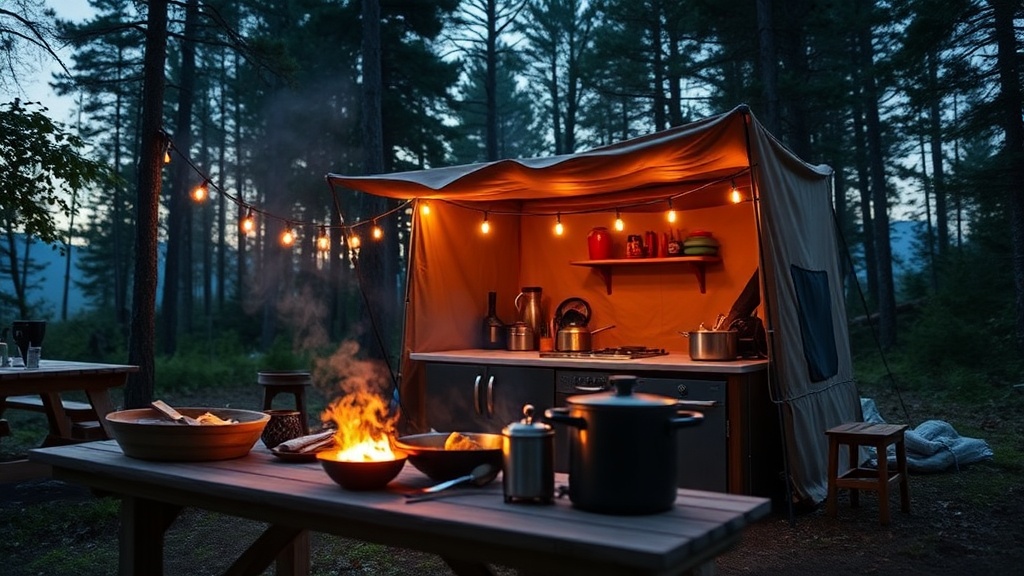
With your zones established, assembly takes five minutes. Place your stove on a stable surface—picnic tables work, but I prefer a dedicated camp table at standing height to spare my back. If you're cooking on the ground, a folding camp table or even a sturdy cooler creates a workspace that prevents the kind of hunching that ruins a good back by day three.
Set up your stove with the windscreen positioned correctly. Test the flame before you need it—there's nothing worse than discovering a clogged burner when you've got hungry campers and a pot of water waiting. Arrange your cooking zone within arm's reach: pot to the left if you're right-handed, utensils to the right, cutting board and prep items behind.
I learned this spatial arrangement from watching professional outdoor educators at Lutherock. They treated camp cooking like a dance, every movement efficient and purposeful. Mimic this by creating what chefs call a "mis en place"—everything in its place before you start cooking.
Step 4: Establish Your Food Safety Protocols
Here's where my teacher instincts kick in: food safety in the outdoors isn't paranoia, it's basic respect for your companions and your own digestive system. The rules are simple but non-negotiable:
- Keep cold foods cold: Below 40°F. Use a thermometer, not guesswork. In hot weather, shade your cooler and limit opening frequency.
- Cook to temperature: Chicken to 165°F, ground beef to 160°F, whole cuts of beef or pork to 145°F. A simple instant-read thermometer costs $15 and prevents ruined trips.
- Prevent cross-contamination: Use separate cutting boards and utensils for raw meat. If you only have one board, sanitize it between uses with boiling water.
- Wash hands: Before handling food and after handling raw meat. A hand-washing station with a soap dispenser and catch basin belongs in every camp kitchen.
"The wilderness doesn't forgive shortcuts. I've seen entire camping groups laid low by foodborne illness because someone thought a quick rinse was sufficient. Two minutes of proper hand-washing prevents two days of misery."
Step 5: Create an Efficient Cleaning System
The best camp kitchens clean themselves—or at least make the process so simple that nobody skips it. Heat three pots of water before you start eating: one hot for washing, one warm for rinsing, one cold for sanitizing (add a capful of bleach to this one). This three-bucket system, borrowed from commercial kitchens, ensures dishes are actually clean, not just wiped.
Establish a dishwashing order: glasses first, then utensils, plates, and pots last. This prevents your drinking water from tasting like last night's curry. Dry with microfiber towels—they pack small and dry quickly.
Grey water disposal depends on your location. At established campgrounds with drains, use biodegradable soap and strain food particles into your trash. In backcountry or sensitive areas, pack out all grey water or disperse it 200 feet from water sources and trails.
Step 6: Add the Ambiance (Optional but Recommended)
Once the functional elements are in place, consider the atmosphere. A small string of battery-powered fairy lights hung under your table edge provides functional task lighting without the harsh glare of a lantern. A camp speaker playing music at considerate volume—never after quiet hours—can transform food prep from chore to ritual.
I always bring one non-essential luxury: a small wooden cutting board specifically for bread and cheese, or a French press for morning coffee. These touches remind us that camp cooking isn't about roughing it—it's about cooking differently, with more intention and less automation.
Adapting for Different Camping Styles
For backpackers: Condense to a single pot, a spork, and a pocket stove. Your "kitchen" fits in a stuff sack, but the principles remain—know where everything is, and keep it clean.
For van lifers: Build in permanence. Fixed storage, a pull-out cook surface, and permanent water storage transform your vehicle into a mobile kitchen worthy of a food truck.
For family campers: Create kid-friendly stations. A low table where children can help prep teaches responsibility and investment in meals. Just supervise the knife work.
The Payoff
A well-organized camp kitchen doesn't just produce better meals—it produces better memories. When you're not frantically searching for the can opener or scrubbing pots in cold water at midnight, you have bandwidth for what matters: the stories shared over dinner, the satisfaction of feeding people well, and the particular pleasure of cooking under open sky.
I think back to those Lutherock Friday nights, when I'd watch campers who had struggled through their first kitchen setup earlier that week now moving with confidence, flipping pancakes with practiced ease, calling out "behind!" like line cooks. That's the transformation I'm after—not just fed campers, but capable ones, ready to feed themselves and others wherever the road leads.
Your camp kitchen is waiting. Set it up deliberately, treat it with respect, and it will reward you with meals that taste better than anything from a restaurant. Because food cooked over flame, prepared with care in the open air, carries something extra—the unmistakable flavor of competence.
Steps
- 1
Choose a Flat, Shaded Location Away from Your Tent
- 2
Set Up Your Camp Table and Organize Cooking Zones
- 3
Assemble Your Stove and Arrange Cookware Within Reach