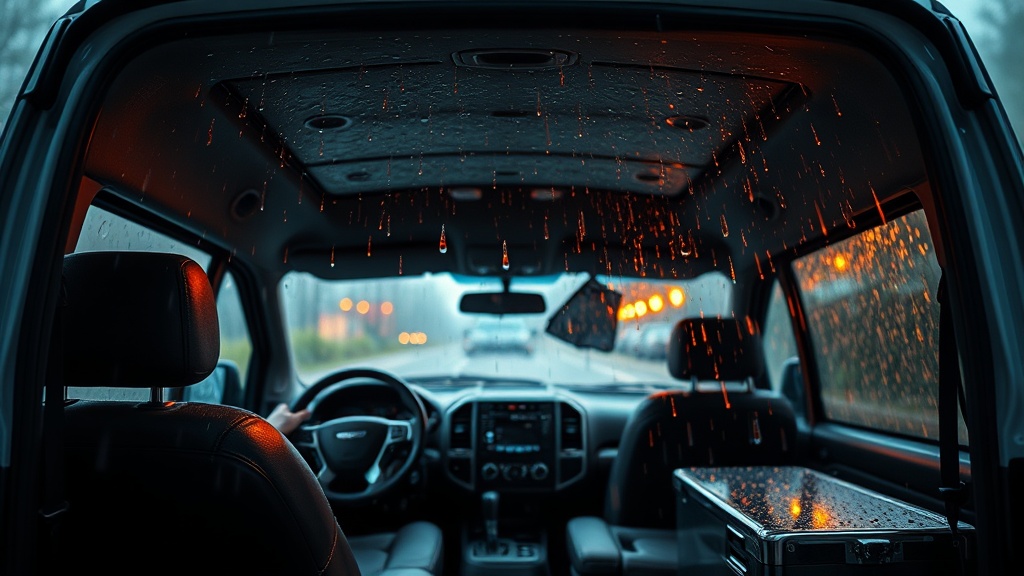
Keeping Your Van Interior Dry During Heavy Rain

This guide covers the practical methods and gear you need to prevent moisture buildup and mold inside your van during heavy rain or extended wet weather. You'll learn how to manage condensation, manage wet gear entry, and select the right ventilation strategies to keep your living space dry and breathable.
Living in a van is a dream until you're staring at a damp ceiling at 3:00 AM. Rain isn't just an external problem; it’s an internal one. When it rains, the temperature drops, and the humidity inside your van spikes because of your own breath and cooking. If you don't manage it, you're looking at mildew on your sleeping bag or, even worse, rot in your wooden cabinetry.
How Do I Prevent Condensation Inside My Van?
Preventing condensation requires a two-pronged approach: managing your internal moisture sources and ensuring constant airflow through your vents.
Condensation happens when warm, moist air hits a cold surface—like your van's metal walls or windows. To stop this, you need to keep the air moving. If you seal yourself in tight to stay warm, you're actually making the problem worse. It sounds counterintuitive, but a little bit of fresh air is your best friend here.
One of the most effective ways to combat this is by using a dedicated ventilation system. If you have a MaxxAir fan, keep it running even when it's raining. These fans are designed to work even when the vent cover is partially closed, allowing moisture to exit without letting a deluge in. If you don't have a roof fan, even cracking a window a fraction of an inch can make a massive difference.
Pro-Tips for Moisture Control:
- Use a Dehumidifier: If you have plenty of power, a small electric dehumidifier can be a lifesaver. If you're running on limited battery, look into rechargeable silica gel canisters.
- Manage Your Breath: It sounds silly, but if you're sleeping in a tight space, your breath adds a significant amount of water to the air. Try to keep your head slightly out of your heavy duvet if it's safe to do so.
- Cook with Care: Never cook without a fan running. Steam from a pot of boiling water is a huge contributor to a damp van.
Don't forget about your clothes. If you hang wet clothes inside the van to dry, you're essentially adding a humidifier to your living space. If it's pouring outside, keep those damp layers in a sealed plastic bin or hang them in a way that doesn't block your airflow.
What Is the Best Way to Manage Wet Gear?
The best way to manage wet gear is to create a "wet zone" at the entrance of your van to prevent moisture from migrating to your sleeping or cooking areas.
The biggest mistake I see new van lifers make is bringing a soaking wet pair of boots or a damp rain jacket straight into the main living area. Once that moisture enters the air, it's hard to get out. You need a staging area. A small, heavy-duty rubber mat or a plastic tray right by the sliding door can catch the runoff from your boots. This keeps the mud and water from soaking into your floor mats or rugs.
When it comes to clothing, I highly recommend using dry bags. If you've been hiking in a downpour, don't just toss your wet clothes into a laundry bag. Put them in a waterproof Patagonia Black Hole Dry Bag or a similar heavy-duty dry bag. This keeps the moisture contained so it doesn't evaporate into your sleeping area while you sleep.
Here is a quick breakdown of how to categorize and store your gear during a storm:
| Gear Type | Storage Method | Why It Matters |
|---|---|---|
| Wet Footwear | Plastic Bin/Tray | Prevents floor soaking and mold. |
| Damp Clothing | Sealed Dry Bag | Keeps humidity levels low in the cabin. |
| Electronics | Hard Plastic Case | Protects against high humidity and splashes. |
| Sleeping Gear | Inside a Ziploc or Liner | Keeps your bed dry even if the air is damp. |
If you're worried about your electronics, don't be. Most modern gear is quite hardy, but high humidity can still cause issues over time. Keeping your laptop or camera in a dedicated, airtight case when not in use is a smart move. It's much better to be safe than to find a layer of moisture on your expensive gear after a week of rain.
Before you head out on a wet trip, make sure you've done a proper gear check to ensure all your waterproof containers are actually functional and leak-free.
How Much Electricity Do I Need for Dehumidifiers?
The amount of electricity you need depends entirely on whether you are using a passive desiccant or an active electric dehumidifier.
This is where things get tricky for van lifers. If you're using a small, plug-in electric dehumidifier (the kind you might see in a bathroom), you're going to pull a significant amount of power. Most of these units run at a constant draw. If you're running a high-capacity setup, you'll need to monitor your battery discharge rates carefully to ensure you don't wake up to a dead system.
If you're worried about your power levels, you might want to check your setup—especially if you've noticed your portable power station cutting out during heavy use. An electric dehumidifier can be a heavy load for a small portable station.
Comparison of Dehumidification Methods:
- Desiccant Packs (Silica Gel): These are cheap, require zero electricity, and are great for small spaces like a glove box or a single drawer. However, once they are "full," they need to be dried out (usually in an oven or via heat), which is a hassle on the road.
- Small Electric Dehumidifiers: These are much more powerful and can actually pull liters of water out of the air. They are perfect for a long rainy stint, but they require a consistent power source.
- Ventilation (The Fan Method): This is free and uses very little power (especially if you have a high-quality fan like a MaxxAir). It's the most sustainable way to manage moisture, but it's less effective if the outside air is also extremely humid.
The catch? If you're in a very humid environment—like a rainforest or a coastal area during a storm—ventilation alone might not be enough. In those cases, you'll likely need to rely on a combination of a fan and a desiccant-based solution. It's all about layering your defenses.
One thing to keep in mind: if you're using an electric dehumidifier, you'll eventually have to empty the water tank. This means you'll be carrying a bucket of water from your van to a drain. It's a small chore, but it's a part of the reality of living in a small space during a storm. Plan your workflow accordingly.
If you find yourself stuck inside more than usual because of the weather, you'll probably be doing a lot more cooking. Remember that every time you boil water, you're adding to the moisture problem. Keep your pots covered as much as possible to minimize the steam escaping into the cabin.
Don't let a little rain ruin your mood. A little preparation goes a long way in keeping your van cozy and, most importantly, dry. Whether you're a seasoned traveler or just starting out, mastering the art of moisture management is a skill you'll use for years to come.