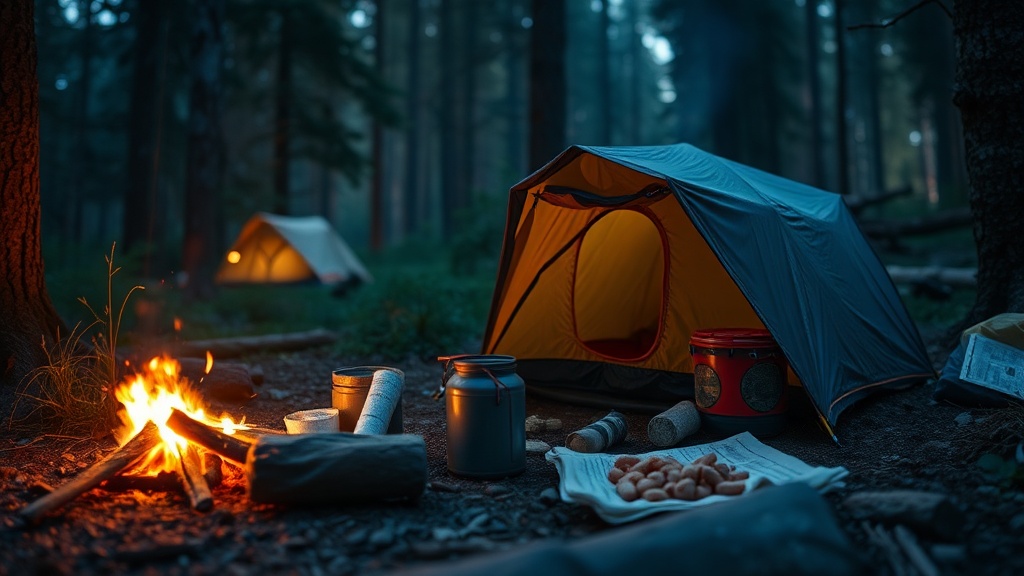
Protecting Your Provisions: Smart Food Storage for a Wildlife-Friendly Campsite

Protecting Your Provisions: Smart Food Storage for a Wildlife-Friendly Campsite
The gentle chirping of crickets sometimes gives way to the tell-tale rustle of leaves just outside your tent. A quick flashlight beam catches a pair of gleaming eyes — a curious raccoon, perhaps a bolder fox, investigating the lingering scent of last night’s s’mores. Many of us have experienced this moment, the sudden realization that our delicious campfire cooking has attracted some unwanted nocturnal visitors. This guide isn't about scaring off wildlife; it's about thoughtful preparation, detailing how responsible food storage and waste management practices can keep both your provisions safe and the local fauna healthy, ensuring a more peaceful — and less chaotic — camping experience for everyone.
Understanding how to properly store your food and manage waste isn't just about protecting your snacks from hungry critters. It plays a significant role in wildlife conservation and, frankly, your own safety. When animals become accustomed to human food, they can lose their natural foraging instincts, which often leads to unhealthy diets and increased conflicts with people. A fed bear, as the saying goes, is a dead bear. Preventing these negative interactions starts with understanding why animals are drawn to our campsites and implementing simple, effective strategies to deter them.
Why Does Our Camp Food Attract So Much Attention?
For wild animals, our campsites are like an all-you-can-eat buffet suddenly dropped into their natural habitat. They possess an incredible sense of smell, far surpassing our own, capable of detecting the faintest scent of food, toothpaste, or even sunscreen from considerable distances. A bear, for example, can smell food from miles away — a steak sizzling over an open fire or an open bag of chips inside a tent proves an irresistible beacon. Their motivations are simple: calories and survival. They aren't trying to be mischievous; they're simply seeking out the easiest source of energy, and human food often presents the path of least resistance.
When animals repeatedly find food at campsites, they quickly learn to associate humans with easy meals. This behavioral conditioning is problematic for several reasons. First, it can lead to aggressive encounters. An animal accustomed to handouts might become bold, approaching tents or even people, potentially causing injury. Second, our food isn't good for them. It lacks the nutritional balance of their natural diet and can lead to health issues. Third, and most tragically, animals that become habituated to human food often need to be relocated or, in severe cases, euthanized to protect public safety. It’s a harsh reality, but one that underscores the gravity of proper food management. For comprehensive advice on coexisting with wildlife, consider resources like the