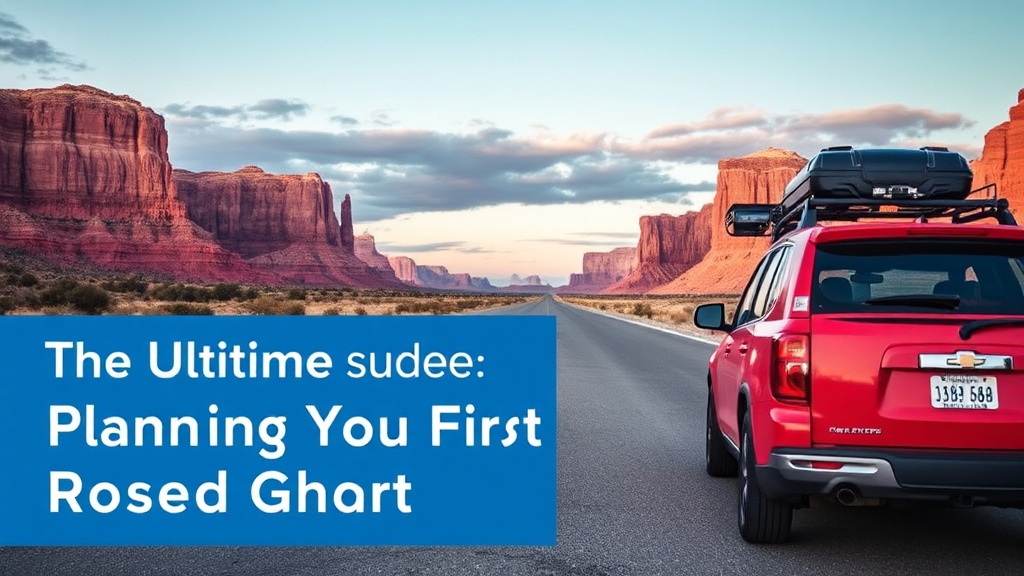
The Ultimate Guide to Planning Your First Cross-Country Road Trip

This guide breaks down everything needed to plan a cross-country road trip—from route selection and vehicle prep to budgeting and campfire-worthy stops along the way. Whether the goal is hitting every national park between coasts or simply seeing what America looks like from the driver's seat, a well-planned road trip delivers stories that last a lifetime. You'll learn how to avoid common pitfalls, stretch a travel budget, and build an itinerary that leaves room for the unexpected detours that make the best memories.
How long should a cross-country road trip take?
Most first-timers need two to three weeks to cross the United States comfortably. The exact timeline depends on the route—driving from New York to Los Angeles via Interstate 80 covers roughly 2,800 miles, while a southern route along Interstate 10 stretches about 2,700 miles but passes through Texas, which alone demands extra time.
Here's the thing: speed-running the trip in five days misses the point. (Unless the goal is simply moving a car across the country—not experiencing it.) A comfortable pace allows for 6-8 hours of driving daily, leaving evenings free for setting up camp, exploring towns, or gathering around a fire ring.
Worth noting: the "perfect" timeline doesn't exist. Some travelers spend three months meandering. Others take ten days. The catch? First-timers consistently underestimate how exhausting consecutive long-haul driving days become. Build buffer days into the itinerary—especially for weather delays, mechanical issues, or that roadside barbecue joint that demands an unplanned stop.
What's the best route for a first cross-country road trip?
Interstate 80 (San Francisco to New York) and Interstate 40 (Los Angeles to Wilmington, North Carolina) remain the most popular first-timer routes for good reason—they're well-maintained, offer consistent services, and pass through diverse landscapes without requiring extreme mountain driving or desert isolation.
That said, the "best" route depends entirely on what scenery calls to you. Here's a quick comparison of three classic options:
| Route | Mileage | Highlights | Best For |
|---|---|---|---|
| Interstate 80 | ~2,900 miles | Lake Tahoe, Salt Lake City, Chicago | Mountain lovers, city stops |
| Interstate 40 | ~2,500 miles | Grand Canyon, Albuquerque, Nashville | Desert scenery, southern charm |
| Interstate 90 | ~3,100 miles | Badlands, Yellowstone, Seattle | National park enthusiasts |
The northern route via I-90 rewards travelers with Yellowstone National Park and the Badlands—but snow can linger into May. I-40 delivers reliable weather year-round and iconic stops like the Grand Canyon without significant elevation changes. I-80 splits the difference, offering mountain scenery without the highest passes.
Consider downloading offline maps through Apple Maps or Google Maps before departure. Cell service disappears precisely when you'll want to check that promising forest service road.
How do you prepare a vehicle for a cross-country road trip?
A pre-trip inspection prevents 90% of roadside breakdowns—and the inspection should happen at least two weeks before departure, not the night before.
Start with the basics: oil change (even if it's not quite due), tire inspection including the spare, brake check, and fluid top-offs. Ask the mechanic specifically about the serpentine belt, battery health, and coolant condition—three common culprits for cross-country failures.
Tires matter more than most first-timers realize. The catch? That worn tire with "just enough tread" for local driving becomes a blowout waiting to happen at 75 mph through Arizona heat. Replace tires showing wear bars before the trip. The cost beats waiting for a tow truck outside Flagstaff.
Pack a roadside emergency kit containing:
- Jumper cables or a portable jump starter (the NOCO Boost Plus GB40 works reliably)
- Tire pressure gauge and 12V air compressor
- Basic tool set, duct tape, and zip ties
- Flashlight with extra batteries
- Water—gallons of it, especially for desert crossings
- First aid kit stocked beyond band-aids
Worth noting: AAA membership pays for itself with one breakdown. The Premier level includes 200 miles of free towing—enough to reach a real mechanic from most remote locations.
What should you pack for a cross-country road trip?
Pack for versatility, not every possible scenario. The goal is traveling light enough to find things quickly, but prepared enough to handle temperature swings from desert heat to mountain evenings.
Clothing follows the layer principle. Merino wool base layers (brands like Smartwool or Darn Tough socks) resist odors and regulate temperature across climates. One reliable rain shell beats three mediocre jackets. Two pairs of broken-in shoes—hiking boots and casual sneakers—cover most situations.
Camping gear depends on accommodation plans. Hotel hoppers need minimal equipment. Those planning to camp consistently should invest in quality sleep systems: a REI Co-op Trailmade tent, Therm-a-Rest sleeping pad, and bag rated 10 degrees below expected lows. Nothing ruins a road trip like three consecutive nights of shivering.
The real packing priority? Organization. Roof-top cargo boxes (the Thule Force XT line offers solid weatherproofing) free interior space, but pack items needed daily—phone chargers, toiletries, rain gear—within arm's reach. Use clear plastic bins labeled by category. Digging through a trunk pyramid at every stop gets old fast.
How much does a cross-country road trip cost?
Budget $150-250 per day for a moderate road trip covering 3,000 miles over two weeks. This breaks down roughly to:
- Fuel: $300-500 (depending on vehicle efficiency and current prices)
- Accommodations: $75-150/night (mix of camping and budget hotels)
- Food: $40-60/day (groceries for breakfast/lunch, restaurants for dinner)
- Attractions/activities: $20-50/day
- Contingency fund: $300 minimum
That said, costs vary wildly based on travel style. Car camping at $25/night National Forest sites versus $150 Hampton Inns changes the math dramatically. Cooking meals on a Coleman Classic propane stove (paired with a basic cooler) cuts food costs significantly compared to restaurants.
The catch? Unexpected expenses happen. That weird grinding noise outside Amarillo. The sudden craving for a real bed after five nights in a tent. The admission fee for that can't-miss museum. Build 20% padding into the budget—or regret it later.
Gas prices fluctuate by region. California and Hawaii hit hardest; the Gulf Coast states typically offer relief. Apps like GasBuddy help, but don't drive miles off-route to save three cents per gallon. The time cost exceeds the savings.
Where should you stop along the way?
The best road trip memories rarely happen on the interstate. Plan major stops—national parks, cities worth exploring, friends to visit—but leave gaps for discovery.
Scenic byways worth the detour include Utah's Highway 12 (All-American Road status for good reason), the Blue Ridge Parkway through Virginia and North Carolina, and California's Highway 1 (check conditions—landslides close sections regularly). These routes add time but subtract stress—the monotony of interstate driving melts away on winding mountain roads.
National parks dominate most cross-country itineraries for valid reasons. The National Park Service manages over 400 units, and many cluster near major routes. Zion, Arches, Great Smoky Mountains, and the Grand Canyon all sit within easy reach of interstates. Reserve campsites months ahead—or expect overflow camping and day-use entry lotteries during peak season.
Small towns deliver unexpected treasures. The world's largest ball of twine in Kansas. A family-run diner in Oklahoma serving pie that rivals anything from Brooklyn. A municipal campground in Nebraska with hot showers and cottonwood shade for $15. These stops don't appear in guidebooks—they emerge through conversation with locals and fellow travelers.
That brings us to the heart of it. Road trips reward flexibility. The rigid itinerary—wake at 6, drive 8 hours, arrive at 4—creates efficient travel, not memorable travel. Build in empty days. Follow that sign promising "Meteor Crater 20 miles ahead." Accept the invitation to join strangers around their fire ring. (Bring firewood as an offering. It's good manners.)
The stories worth retelling—the ones that still raise goosebumps years later—rarely come from sticking to the plan. They come from taking the road that wasn't on the map.