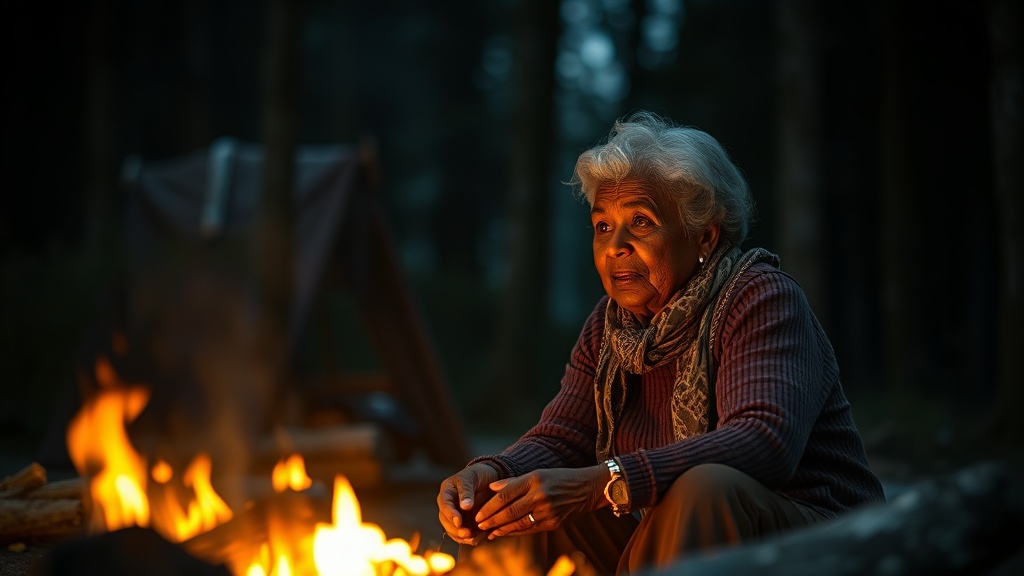
The Women Who Kept the Fire: Honoring the Voices That Built Campfire Culture
There's a version of campfire history that gets told a lot. It involves axes and conquests and men in flannel who discovered the wilderness. That version is wrong, or at least it's wildly incomplete.
Let me tell you the version I know.
My grandmother, Ida Mae Washington, was the best storyteller I have ever met in my life. Not the second best. Not close behind somebody else. The best. Period. Full stop.
She'd wait until it was fully dark — she had this rule, you couldn't start a ghost story until you couldn't see the trees anymore, only feel them — and then she'd lean forward in her lawn chair and drop her voice to a register I can only describe as reckoning. Twelve, fifteen of us cousins would be sitting around the fire, and the oldest one was always trying to act unbothered, and within four minutes we were all gripping our folded chairs. She never wasted a word. She knew exactly when to pause. She knew the power of the question left unanswered.
She learned those stories from her mother, who learned them from hers. That's three generations of women building a tradition that I'm still living inside of right now, every time I light a fire and the night gets quiet.
International Women's Day is March 8th. And I'll be honest — I almost skipped writing about it. Not because it doesn't matter, but because I didn't want to write one of those posts that pats itself on the back for acknowledging the obvious. "Women are important! Here are five empowering quotes!"
No. I wanted to write something true. And what's true is this: in the campfire culture I grew up in — Southern, Black, deeply rooted in storytelling — women didn't just support the tradition. They were the tradition. The food came from them. The stories came from them. The rituals came from them. Men built the fire structure, sure. Women decided what happened around it.
That distinction matters.
What I Learned From Eight Years of Camp Lutherock
I spent eight summers as a counselor at Camp Lutherock up in the Blue Ridge Mountains. Best job I ever had outside of teaching. We ran "Campfire Stories" every Friday night — it was my session, and I loved it more than anything.
But here's what I'll tell you about who actually made that session work: it was the women on staff.
The female counselors at Lutherock were the ones who held the emotional architecture of those circles. They were the ones who knew which kid was having a hard week and needed to hear a funny story instead of a spooky one. They were the ones who'd pull a shy 10-year-old into the telling — "Go ahead, tell them about your dog, the kids will love it" — and suddenly that kid was a storyteller for the first time in their life.
There was a senior counselor named Miss Renata, who is now a principal somewhere in Charlotte. She could take a group of homesick seven-year-olds and, I promise you, within twenty minutes of a fire circle, they'd forgotten they were sad. She didn't perform. She just listened with her whole body, and kids felt seen, and seen kids will tell you anything.
I took notes on Renata without her knowing it. Half of what I did in my English classes for twelve years — the way I created a space where kids felt safe enough to actually say something — I learned watching her run a campfire circle.
The Recipes That Come From Somewhere Specific
There's a red beans and rice recipe my mother makes — she has made it at every family fire gathering since I was five years old — that she got from my great-aunt in New Orleans. My great-aunt got it from her mother. My mother makes it in a cast iron pot that came with the recipe.
I asked her once where the recipe came from originally, going back as far as she knew. She said, "Baby, that recipe is older than anybody who's still alive."
That's a real thing. That's an oral tradition and a culinary tradition and a campfire tradition all living in the same pot.
When campfire cooking gets talked about in the outdoor media space, it gets attached to a very specific aesthetic — Dutch ovens, camping brands, guys with beard oil. And those things are fine. But there's a whole other lineage of campfire cooking that runs through Southern Black kitchens, through Indigenous communities, through immigrant families who made the fire the center of the gathering because that's what their grandparents did.
The women in those lineages rarely get profile pieces in outdoor magazines. But the food they developed shows up across campfire cooking media, just... stripped of its origin story.
So for International Women's Day, here's a recipe I want to give back its context:
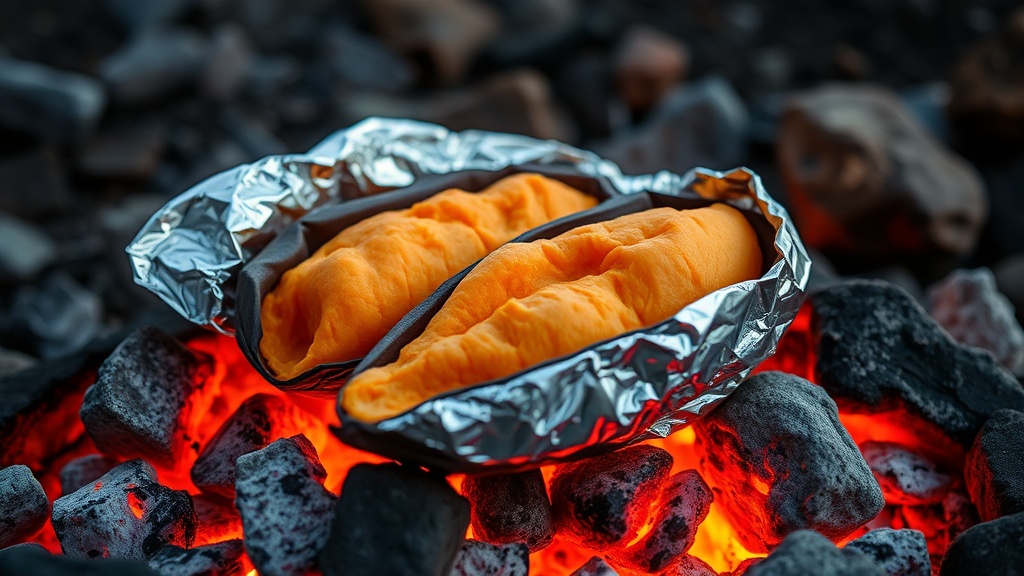
Grandma Ida's Foil-Pack Sweet Potatoes (as I remember her making them, reconstructed with Keisha's help)
My grandmother did not use recipes. She used knowledge. So what follows is my best approximation, tested many times over our backyard fire pit until it tasted right.
You'll need:
- 2 medium sweet potatoes, scrubbed and sliced into ½-inch rounds
- 2 tablespoons butter, cut into small pieces
- 2 tablespoons brown sugar
- 1 teaspoon cinnamon
- Pinch of cayenne (this is the part my grandmother never told anyone; my mother figured it out by accident twenty years after she passed)
- Heavy-duty foil
The method:
Lay your sweet potato rounds on a large sheet of foil — two layers minimum if your fire runs hot. Dot with butter. Mix the sugar, cinnamon, and cayenne and dust it over the top. Seal the foil tight, double-fold the edges.
In a wood fire, bury the packet in the coals — not in the flame, in the coals. Set a timer for 25 minutes. When you open it, the potatoes should be soft through and slightly caramelized on the bottom.
She served these at the end of the night, when the fire was lower and the conversation had gone somewhere real. The sweetness hit different after hours of smoke and dark air.
Cayenne. That was her secret. Just enough heat at the back of your throat to remind you that sweetness isn't simple.
Keisha and Nia, Right Now, at the Fire
I want to end here, with what's happening in my own backyard.
My daughter Nia is 11. She started telling her own campfire stories about two years ago — she does these elaborate things that are half ghost story, half comedy, because she figured out that the funniest moment is always funnier right after the scariest moment. She did not learn that from me. She developed it herself, watching the crowd (her patient older brother and whoever else is around), adjusting in real time.
My wife Keisha sits at the fire with her legs tucked up in the big Adirondack chair and she is the official keeper of the ending. She has this thing where she knows when the night is over before anyone else does, and she says the exact right thing to wrap it up — not to end the fun, but to seal it. Like she's putting a lid on something good so it stays preserved.
I don't think Nia learned from Keisha consciously. But Nia has started doing it too. There's a thing she does now at the end of her stories, a pause and a turn of phrase that closes the loop. I watched Keisha watch Nia do it for the first time a few weeks ago. Keisha caught my eye across the fire and didn't say anything. She didn't need to.
Transmission. That's what campfire culture actually is. That's what's been happening around fires for 400,000 years. And if you look at the actual chain of transmission — in my family, in so many families — you'll find women at every link.
That's not a feel-good add-on. That's the history.
Light one this weekend. Invite the women in your life who hold your stories. Ask the oldest one to tell you something she's never written down.
You might be surprised what the firelight pulls out.
Keep the circle unbroken.