Why Your Camp Fire Is Smoldering Instead of Burning

The frustration of a dying flame
A group of campers sits around a ring of stones in the High Sierras, waiting for the coals to reach the perfect temperature for searing steaks. Instead of a roaring, steady heat, they find themselves staring at a pile of grey ash and a few stubborn, glowing embers that refuse to catch. Every time they add a new piece of wood, the flame gasps and dies. This smoldering effect isn't just a nuisance; it ruins the timing of your cook and can leave you shivering in the dark when the temperature drops.
A smoldering fire is usually the result of one of three things: poor airflow, incorrect fuel selection, or excessive moisture. Understanding the science of combustion—specifically the relationship between oxygen, heat, and fuel—will help you maintain a consistent blaze regardless of whether you are camping in the damp forests of the Pacific Northwest or the dry deserts of Utah. This guide breaks down the practical steps to troubleshooting a weak fire and ensuring you have reliable heat for cooking and warmth.
The Oxygen Problem: Airflow and Structure
Fire requires three elements to exist: fuel, heat, and oxygen. Most campers focus heavily on the fuel but neglect the oxygen. If your fire is smoldering, you likely have a "choked" fire, meaning the combustion process is being starved of air. This is common when wood is packed too tightly together.
The Geometry of the Flame
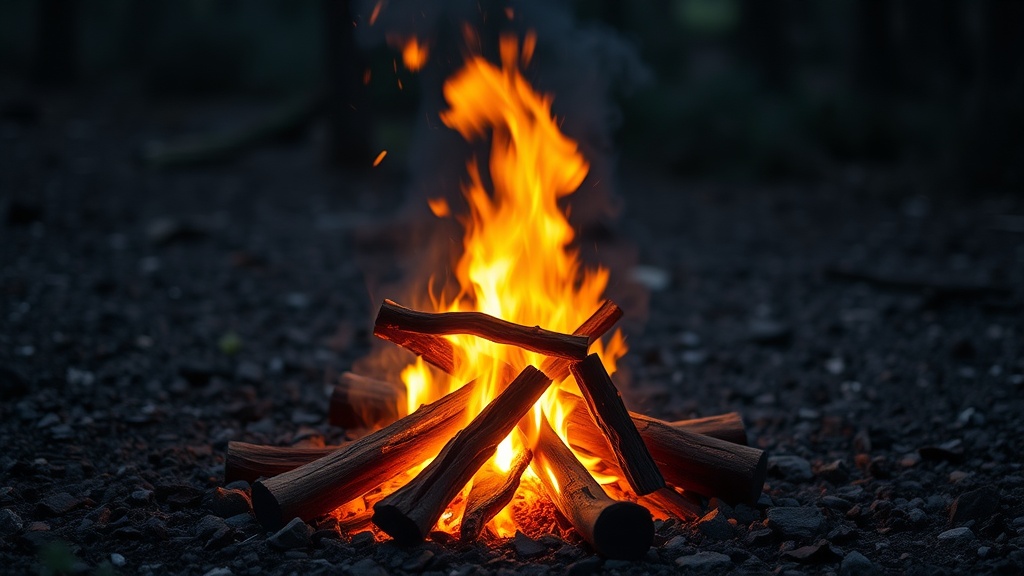
How you stack your wood determines how much air can pass through the base of the fire. If you use a "Log Cabin" style, where large logs are stacked in a tight square, you might find the center becomes a heat trap that actually stifles oxygen. For a more consistent burn, try the "Tipi" method or the "Log Cabin" with intentional gaps. A Tipi structure, where smaller kindling leans against a central pole or a larger piece of wood, naturally creates a chimney effect. This draws air upward through the center, feeding the flame with a constant stream of oxygen.
The Role of the Ember Bed
A common mistake is adding large logs too early in the process. If you place a heavy piece of oak or hickory directly onto small kindling, the weight of the log crushes the air pockets underneath. This creates a suffocating layer of ash that prevents oxygen from reaching the burning embers. Instead, wait until you have a thick bed of glowing coals—roughly two inches deep—before adding your larger fuel. This bed acts as a heat reservoir and ensures that the base of your new fuel is constantly being hit with high-intensity heat and air.
Fuel Selection: Moisture and Density
The type of wood you bring to the campsite dictates how much energy you get out of it. If you are picking up wood from a fallen branch on the ground, you are likely picking up "dead and down" wood, which is often the primary culprit for a smoldering fire. This wood has absorbed ground moisture and is essentially a sponge.
Identifying Seasoned vs. Green Wood
"Green" wood is living or recently fallen wood that is full of sap and moisture. When you try to burn green wood, the fire spends all its energy trying to evaporate the water inside the wood rather than producing heat. This results in a heavy, white smoke and a smoldering, low-temperature flame. For a successful fire, you need "seasoned" wood. Seasoned wood is dry, brittle, and has a low moisture content. A quick way to test this is the "snap test": break a small stick. If it bends or splinters with a dull thud, it is too wet. If it snaps with a sharp, loud crack, it is ready for the fire.
The Density Dilemma
Different woods burn differently. Hardwoods like Hickory, Oak, and Mesquite are dense and produce long-lasting, high-heat coals. These are excellent for cooking, but they take much longer to ignite. Softwoods like Pine, Cedar, or Fir ignite very quickly and create large, dancing flames, but they burn out rapidly and can be "dirty" fuels that produce a lot of soot. A professional approach is to use softwoods to build the initial flame and heat, then gradually transition to hardwoods to maintain a steady, long-lasting ember bed. If you find your fire is dying out too fast, you may be relying too heavily on softwoods.
Managing Moisture and Environmental Factors
Even if you brought seasoned wood, the environment can work against you. If you are camping in a high-humidity area, such as the coastal regions of Oregon or during a rainy season in the Appalachians, your wood can become "surface wet" within hours of being unpacked.
Pre-Heating Your Fuel
If the air is damp, your kindling will struggle to catch. A useful trick is to keep your kindling and small sticks inside your vehicle or near your tent (away from the heat source) to keep them as dry as possible. When you are ready to build the fire, you can also use a "pre-heat" method: place your small kindling near the edge of an existing, low-intensity heat source to drive out surface moisture before you actually attempt to light it. This ensures the wood catches immediately rather than smoldering for ten minutes.
The Ash Layer Obstacle
As wood burns, it leaves behind ash. While a certain amount of ash is necessary to insulate the coals, an excessive amount will act as an insulator that blocks oxygen. If you notice your fire is becoming a pile of grey dust with no visible flame, you need to "stir" the fire. Use a fire poker to gently move the coals and redistribute the ash. This allows fresh air to reach the unburnt carbon at the bottom of the pile. Be careful not to stir too much, or you might scatter the heat and lose your ember bed entirely.
Practical Troubleshooting Checklist
If you find yourself staring at a smoldering mess, run through this checklist to diagnose the issue quickly:
- Is there smoke? If the smoke is thick and white, your wood is too wet. You need more heat to evaporate the moisture.
- Is the fire "tight"? If the wood is packed too closely, use a poker to create gaps. Air must be able to flow through the pile.
- Is the wood too large? If you added large logs too soon, you have smothered the flame. Remove one or two large pieces to let the smaller kindling breathe.
- Is the base covered in ash? If the coals look buried, stir the bed to introduce oxygen.
Maintaining a proper fire is a foundational skill for any camper, whether you are using it for warmth during a cold night in the Mojave Desert or for cooking a meal. By focusing on the trifecta of airflow, seasoned fuel, and proper structure, you can move past the frustration of the smolder and enjoy the reliable heat that a well-built campfire provides.