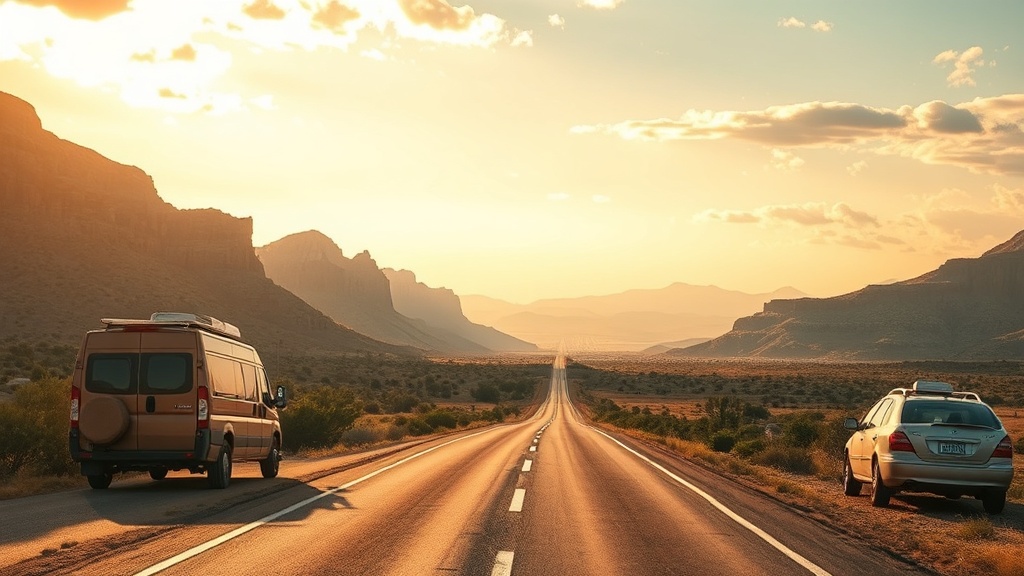
Why Your Road Trip Itinerary Is Probably Too Ambitious (And How to Fix It)

Why do we overplan our camping road trips?
Most people think a successful camping road trip means seeing as much as humanly possible—cramming six national parks into eight days, driving twelve hours between campsites, treating the journey like a checklist to conquer rather than an experience to absorb. That mindset is backwards. The best road trips happen when you stop treating mileage as a badge of honor and start giving yourself room to breathe, explore, and actually enjoy the places you're sleeping.
I've watched this pattern repeat for years at Camp Lutherock. Families would arrive Friday evening absolutely fried—kids cranky, parents snipping at each other, everyone too tired to gather around the fire they'd been dreaming about all week. When I'd ask about their drive, the answer was almost always the same: "We wanted to fit in as much as we could." They'd pack their itinerary so tight that arrival felt like relief rather than celebration. The campfire—supposedly the whole point—became an afterthought.
Social media doesn't help. Scroll through Instagram and you'll see perfectly curated road trip albums: sunrise at Zion, lunch in Moab, sunset at the Grand Canyon, all in one impossibly beautiful day. What those posts don't show is the exhaustion, the missed turnoffs, the arguments about who forgot to book the campsite, the meals eaten cold in a moving vehicle. Real road trips have mess and margin. They need space for the unexpected detour to a roadside peach stand, the extra hour at a swimming hole, the conversation that stretches past midnight because nobody has an early departure looming.
How much driving is too much for a camping trip?
Here's a practical framework I've developed after eight years of watching what works: on travel days, limit yourself to four hours of drive time maximum. That might sound conservative—maybe even laughable if you're crossing multiple states—but hear me out. Four hours behind the wheel leaves you with enough mental and physical energy to set up camp properly, cook a real dinner, and still have daylight (or firelight) hours to actually be present where you are.
Consider what a travel day actually involves. You've got packing up your site—rolling sleeping bags, breaking down tents or securing gear in your van, dealing with the trash you accumulated. Then there's the drive itself, which rarely goes exactly as mapped. Construction zones, scenic pullouts you can't resist, the gas station that takes twenty minutes because someone's buying lottery tickets and beef jerky in slow motion. Upon arrival, you need to check in, find your spot, and set up all over again. By the time you're done, a six-hour drive day easily consumes ten hours of your life.
When you string multiple heavy travel days together, you enter what I call "camping purgatory"—technically on a trip, but perpetually in transition. You never fully settle in. Your gear stays half-packed. Your nervous system stays in highway mode. Contrast that with the trip where you stay three nights in one place: you wake up on day two knowing exactly where the coffee supplies are, you've got time for that longer hike, you can string up a hammock and read a book without guilt. That's when the magic happens.
What's the right balance between planned and spontaneous?
The sweet spot for most camping road trips is what I call the "2-3-2" structure: two nights at your first stop, three nights somewhere spectacular that deserves deeper exploration, then two nights at a final location before heading home. This gives you seven nights total—a full week—with only two real travel days in the middle. Everything else is buffer time. Space for wandering. Room for the unexpected.
This approach requires surrendering some control, which makes people nervous. What if the campground is terrible? What if we get bored? What if we miss something amazing thirty miles away? These fears are almost always unfounded. A mediocre campground with time to relax beats a perfect location where you're too exhausted to appreciate it. Boredom at camp is often just the discomfort of slowing down—and once you push through it, you discover rhythms and observations you would've missed at full throttle. As for missing things: that's going to happen regardless. Every trip involves trade-offs. The question is whether you want to miss things because you were rushing past them, or miss things because you were fully absorbed somewhere else.
The planning process itself changes when you embrace this philosophy. Instead of researching twenty potential stops and trying to connect them like a deranged dot-to-dot puzzle, you identify two or three anchor destinations that genuinely excite you. Everything else becomes optional. Maybe you take that detour to the hot springs, maybe you don't—either way, you're not failing some imagined itinerary. You're following your energy and curiosity in real time.
Booking strategies shift too. Popular campgrounds often require reservations months in advance, which seems to conflict with spontaneity. The workaround? Book your anchor nights—the 2-3-2 structure mentioned earlier—and leave the gaps flexible. If you discover a dispersed camping area you love, stay an extra night. If weather turns sour, bail early and adjust. Having those fixed points gives you security; leaving space between them gives you freedom.
Practical considerations for slower travel:
- Stock your pantry like you're staying put. Bring ingredients for three or four real meals rather than relying on restaurant stops. When you're not racing to the next destination, cooking becomes part of the experience rather than a chore to outsource.
- Plan for the morning after arrival. Don't schedule activities for your first full day. Let that be a recovery and exploration day—sleep in, wander locally, get your bearings. You'll enjoy everything more when you're not depleted from the drive.
- Embrace the "camp day." Some of my favorite road trip memories involve entire days where we never left the campground—swimming, napping, fixing gear, playing cards, cooking elaborate meals over the fire. These are not wasted days. They're the whole point.
There's an ancient rhythm to gathering around fire that doesn't translate to rushed schedules. Fire requires tending—building it up, letting it settle, staring into the coals while conversation meanders through topics that need time to develop. You can't schedule that. You can only create conditions where it might occur. That means stopping. Arriving with enough daylight to set up without panic. Having nowhere else you need to be.
"The fire is the main comfort of the camp, whether in summer or winter, and is about as ample at one season as at another. It is as well for cheerfulness as for warmth and dryness." — Henry David Thoreau
Thoreau understood what we keep forgetting: the fire itself is the destination. Not the next viewpoint, not the bucket-list national park, not the mileage milestone. When you build your road trip around arrival rather than transit, you give yourself permission to experience what you came for.
The next time you're planning a camping road trip, resist the urge to optimize every mile. Leave gaps. Build in buffer days. Choose fewer stops with longer stays. Your future self—sitting in a camp chair with a beverage, watching flames dance against a darkening sky—will thank you for the margin. That's where the stories happen. That's where the road trip becomes something worth writing about.
Related resources:
- National Park Service Trip Planning Guide — Official guidance for balancing ambitious itineraries with realistic timelines.
- US Forest Service Know Before You Go — Essential information about road conditions, seasonal closures, and dispersed camping options that can help you build flexibility into your plans.
- Bureau of Land Management Recreation Areas — Resources for finding lesser-known camping destinations where you're more likely to find solitude and space to slow down.