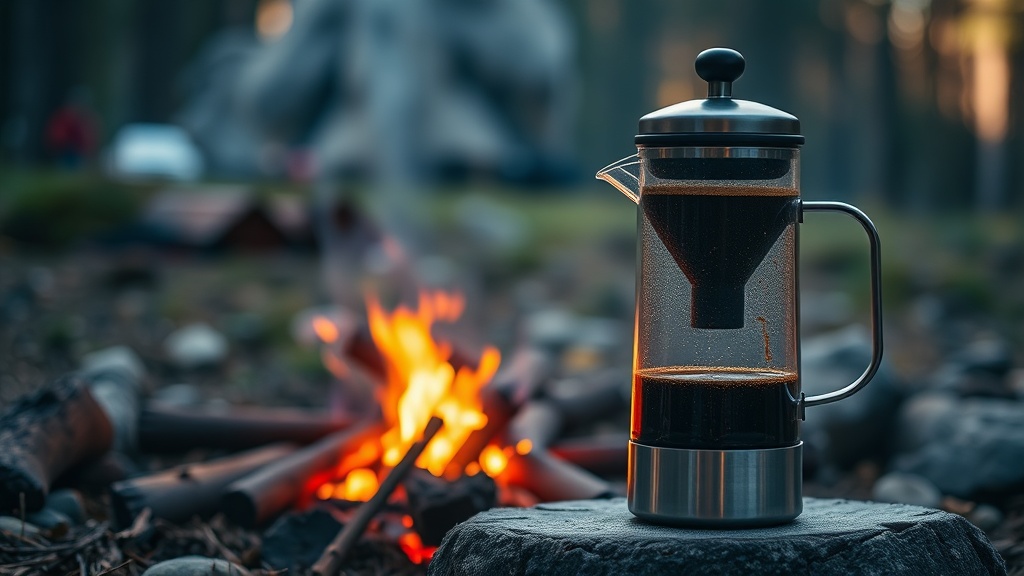
5 Essential Coffee Brewing Methods for the Perfect Morning Campfire

The Classic French Press
The Adventurer's AeroPress
The Rugged Pour-Over
The Simple Percolator
The Instant Coffee Upgrade
There is a specific, sacred window of time that exists between the first crackle of the morning fire and the moment the sun fully clears the treeline. During my eight years running Friday night sessions at Camp Lutherock, I learned that the most important ritual wasn't the storytelling or the song—it was the coffee. That first sip of hot, steaming liquid while the dew is still heavy on the pine needles is what separates a mere overnight excursion from a true wilderness experience.
As a former English teacher, I used to obsess over the perfect syntax. Now, I obsess over the perfect extraction. Making coffee in the backcountry is a delicate balance of chemistry, patience, and gear management. You aren't just looking for caffeine; you are looking for a sensory anchor to the natural world around you. Whether you are a minimalist backpacker or a heavy-duty car camper, your method of brewing says a lot about how you intend to engage with your environment.
In this guide, I will walk you through five essential brewing methods, ranging from the ruggedly primitive to the surprisingly sophisticated. My goal is to ensure that your morning ritual is as intentional and restorative as a spring digital detox, allowing you to disconnect from the digital noise and reconnect with the steam rising from your mug.
1. The Classic French Press: The Gold Standard of Comfort
If you are car camping or staying in a designated campsite with a sturdy table, the French Press is your best friend. It is a reliable, immersion-based brewing method that produces a heavy-bodied, textured cup of coffee that stands up beautifully to the crisp morning air.
Why It Works
Unlike drip methods, the French Press allows the coffee grounds to fully saturate in the water, leading to a rich extraction. This is particularly useful when you are camping in cooler climates where you might want a more robust, "comforting" mouthfeel to warm your hands and soul.
Pro Tips for the Trail:
- The Grind: You must use a coarse grind. If the grind is too fine, you will struggle to push the plunger down, and you’ll end up with a cup full of silt.
- Temperature Control: Since you likely don't have a digital thermometer, aim for "off-the-boil" water. Bring your water to a boil in a camp kettle, then let it sit for about 30 to 60 seconds before pouring.
- The Steep: For the perfect cup, let it steep for exactly four minutes. This prevents the bitterness that often comes from over-extraction.
Note: The French Press is somewhat fragile. If you are traveling by vehicle, wrap the glass carafe in a thick wool sock or a dedicated padded sleeve to prevent breakage during the drive.
2. The AeroPress: The Versatile Adventurer’s Choice
If the French Press is the heavy-duty truck of coffee makers, the AeroPress is the lightweight, high-performance mountain bike. It is incredibly durable, lightweight, and capable of producing everything from a concentrated espresso-style shot to a clean, standard cup of coffee.
Why It Works
The AeroPress uses air pressure to force water through a bed of coffee and a paper or metal filter. This method is incredibly forgiving and highly resistant to the bumps and bruises of a road trip. It is the perfect tool for those who want to maintain a high standard of quality while practicing a productive, eco-conscious lifestyle, as it produces very little waste if you use reusable filters.
How to Master the AeroPress:
- The Setup: Place a filter in the cap, add your medium-fine grounds, and pour in hot water.
- The Stir: Give it a gentle stir to ensure all grounds are saturated.
- The Press: Press the plunger down with steady, even pressure. If you feel too much resistance, your grind is too fine.
I often recommend the AeroPress to travelers who find themselves in remote locations, much like those hidden glacial lagoons in Patagonia, where gear must be both lightweight and indestructible.
3. The Pour-Over (Hario V60 or Kalita Wave): The Purist’s Ritual
For the coffee enthusiast who views brewing as a meditative practice, the pour-over method is unmatched. This method requires a bit more precision and a steady hand, but the reward is a cup of coffee that is remarkably clean, bright, and nuanced.
Why It Works
The pour-over method highlights the subtle notes of your coffee beans—think citrus, jasmine, or berry. When you are sitting in a lush, green forest, a clean cup of coffee can actually enhance your appreciation of the surrounding flora. It is a wonderful way to practice aligning your senses with your body's natural rhythm as you wake up to the light.
The Essentials:
- The Equipment: A lightweight dripper (like a plastic Hario V60) and plenty of paper filters.
- The Technique: You need a steady pour. If you don't have a gooseneck kettle, you can use a standard camp kettle, but you will need to be very careful to pour in small, concentric circles.
- The Bloom: Always start with a "bloom." Pour just enough water to wet the grounds and wait 30 seconds. This releases trapped CO2 and ensures a better flavor.
4. The Moka Pot: The Robust Espresso Alternative
If you are a fan of strong, intense coffee that can stand up to a heavy breakfast of bacon and eggs, the Moka Pot is your way to go. It is a classic piece of stovetop engineering that has been a staple in kitchens (and campsites) for decades.
Why It Works
The Moka Pot uses steam pressure to push water up through coffee grounds, resulting in a very concentrated, heavy-bodied brew. It is essentially a "stovetop espresso maker." It is perfect for making lattes or cappuccinos over a camp stove, allowing you to add a splash of cream or oat milk for a truly decadent morning.
Safety and Success:
- Use Hot Water: To prevent the coffee grounds from "cooking" while the water heats up, always start with pre-heated water in the bottom chamber.
- Watch the Heat: Keep your camp stove on a low-to-medium heat. If the coffee starts sputtering or making a loud whistling sound, remove it from the heat immediately.
- Cleaning: Unlike the AeroPress, the Moka Pot can be a bit messy to clean in the woods. Bring a small brush to ensure no old coffee oils build up in the metal components.
5. The Cowboy Coffee Method: The Primitive Original
Sometimes, you don't want to carry extra gear. Sometimes, the goal is to leave as little a footprint as possible. This is where "Cowboy Coffee" comes in—the most basic, elemental way to enjoy a hot cup of caffeine using nothing but a pot, water, and coffee grounds.
Why It Works
There are no filters, no plungers, and no specialized gadgets. It is the method of the true minimalist. It is rugged, slightly gritty, and deeply satisfying in its simplicity. It is the coffee of the wanderer.
The Method:
- Boil: Bring your water to a boil in a metal camping cup or a small pot.
- Add Grounds: Remove the pot from the heat and add your coffee grounds (use a coarse grind to help them settle).
- The Secret Ingredient: Add a tiny splash of cold water. This helps the grounds settle to the bottom of the pot.
- Wait: Let the coffee sit for several minutes. Once the grounds have settled, pour slowly into your mug, leaving the "sludge" at the bottom of the pot.
While this method is rustic, it is also highly sustainable. You aren't generating any paper waste, making it a great choice for those focused on eco-friendly outdoor practices.
Final Thoughts on the Morning Ritual
Whether you choose the precision of the pour-over or the ruggedness of the cowboy method, remember that the coffee is only half the experience. The other half is the stillness. It is the moment you stop rushing toward your next destination and simply exist in the space you have carved out for yourself.
The next time you are packing your gear, don't just throw a bag of coffee in your bin. Choose a method that matches the spirit of your trip. If you are heading out for a high-intensity hike, go with the AeroPress. If you are settling in for a week of slow living by a lake, bring the French Press. Your morning ritual is the heartbeat of your journey—make it count.