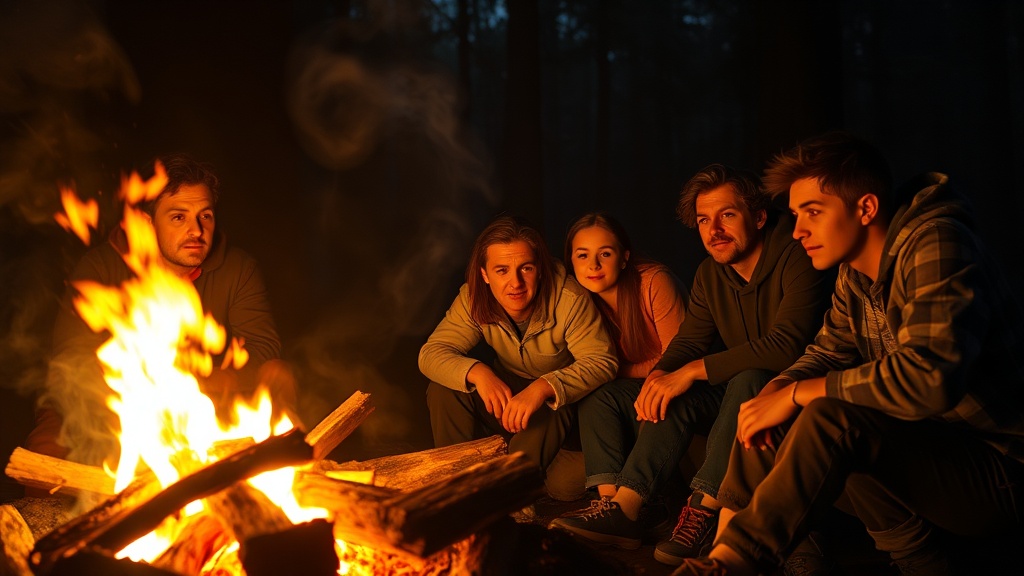
The 3-Second Rule: How to Actually Scare People Around a Campfire

Gather round.
Early March is when folks start pulling the covers off backyard fire pits, stacking wood again, and remembering that spring camping season is close enough to taste. The air still bites after sunset, the fire pops louder than you remember, and somebody always says, "Tell one."
Now here’s the thing: most campfire ghost stories don’t fail because the story is bad. They fail because the teller rushes the scary part.
I learned that over 8 summers at Camp Lutherock and 12 years teaching 8th-grade English (which is still the toughest audience on earth). If you can hold a circle of middle schoolers in dead silence, your mechanics are real.
What's the Difference Between a Jump Scare and Real Dread?
The difference is that a jump scare startles people for a second, while dread keeps them uneasy long after the story ends.
A jump scare is noise: a shout, a clap, a sudden lunge. You get a reaction, maybe a laugh, and the moment disappears.
Dread is pressure. It builds slowly. Shoulders tighten. Folks stop fidgeting. Nobody looks away from the fire because they don’t want to look at the dark.
If you want to master campfire ghost stories, don’t chase the pop. Chase the pull.
How Do You Use Volume to Build Tension in a Ghost Story?
You build tension with volume by lowering your voice as the story gets darker so your listeners have to lean in and work to hear you.
I call this the Lean-In technique, and it works because campfires are noisy on purpose. Crackling wood, jackets rustling, somebody shifting a chair. When your voice drops, the circle has to focus harder. Focus becomes tension.
Try this sequence:
- Start conversational.
- Drop your volume about 15-20% when the strange details begin.
- Go even lower right before your scariest line.
CampMinder’s storytelling guide also emphasizes pacing and deliberate pauses to keep audience attention, which lines up with what I’ve seen in real fire circles and classrooms.
What Is the 3-Second Pause and Why Does It Work?
The 3-second pause is a deliberate silence right before your story’s scariest line that lets your audience’s imagination build more dread than your words ever could.
Right before the climax, you stop. Full stop. Count it in your head: one Mississippi, two Mississippi, three Mississippi. Then deliver the line quietly.
That silence does three jobs at once:
- It signals that something bad is coming.
- It gives imagination time to outrun narration.
- It makes your next sentence feel heavier.
I’m not gonna lie, three seconds feels too long when you first practice. Good. That discomfort is the point. If it feels risky to you, it feels unbearable to them.
This isn’t just a camp counselor trick, either. California State Parks' campfire interpretation handbook explicitly recommends using silence, pauses, and even whispers to catch attention.
How Do You Read the Fire Circle and Adjust for Age?
You read the circle by watching faces, posture, and breathing in real time, then adjusting intensity to match what the group can handle.
Great oral storytelling is a live conversation, not a script recital.
For younger kids (around 8-10), keep the fear atmospheric, avoid graphic imagery, and end with emotional safety restored.
For teens, slow down more than you think and leave one key detail unresolved.
For mixed adults, anchor the story in specific place details, not gore. Real-feeling roads, creeks, and ridgelines always hit harder than blood.
If people are laughing too much, tighten the mood. If a kid is shrinking into a parent, pull back. You’re building memory, not trauma.
How Can You Practice the 3-Second Rule Before Spring Camping Season?
You can practice the 3-second rule in five minutes by telling one short story twice and comparing audience reaction.
Here’s the drill I give new counselors:
- Pick a two-minute story you already know.
- Mark one sentence as your climax line.
- Tell version one with no deliberate pause.
- Tell version two using Lean-In volume plus a full 3-second pause.
- Ask: "Which version made you lean in?"
Nine times out of ten, version two wins by a mile.
And while you’re tuning your storytelling, tune your fire setup too. If your coals are inconsistent, your mood will be too. This quick piece on building a fire that actually lasts is the foundation.
Why Does This Matter for Campfire Traditions?
This matters because campfire traditions survive when stories are told well enough that people ask to hear them again.
That’s true whether you’re telling a ghost story, stirring March wind Dutch oven chili, or lighting your first real spring fire.
A good campfire night is never just about wood and flame. It’s voice, timing, people, and trust.
Use the pause. Lower your voice. Let the silence do its work...
Then watch the whole circle lean in.
FAQ: Campfire Ghost Story Timing and Delivery
How long should a campfire ghost story be?
For most groups, 4-8 minutes is the sweet spot. Long enough to build atmosphere, short enough to keep tension tight.
What age is appropriate for scary campfire stories?
Kids around 8+ can handle light atmospheric stories if there’s no gore and the ending restores safety. Teens can handle more ambiguity and unresolved endings.
How do I pause without losing the audience?
Commit to the pause and keep your body still. If you fidget or smile through it, the tension breaks.
Should I stand or sit while telling the story?
Either works. Stand if your group is large and spread out; sit if the circle is tight and intimate.
What if I mess up a line?
Keep going. A calm recovery is better than apologizing, and most listeners won’t notice unless you call it out.