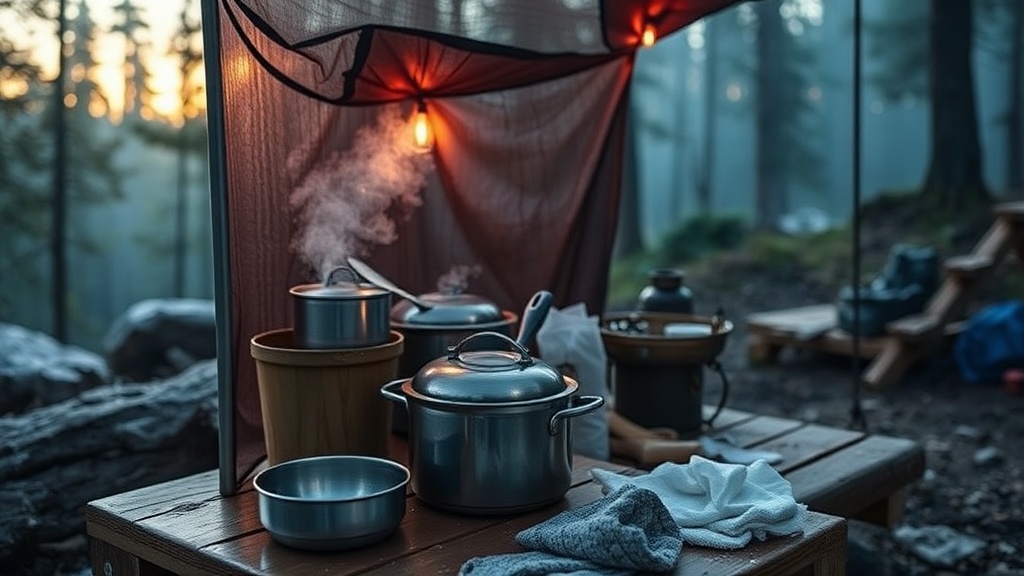
Keeping Your Camp Kitchen Clean Without a Running Water Source

You’re halfway through a heavy skillet of bacon and eggs, the sun is just starting to peek over the treeline, and you realize you’ve used your only clean spatula. Now, you’re staring at a greasy mess with only a small jug of drinking water left. This is the reality of backcountry camping or remote dispersed camping where there isn't a sink in sight. Keeping a camp kitchen clean without running water requires a specific system of water rationing, specialized cleaning tools, and a strict "clean-as-you-go" mentality to prevent your limited resources from running out by lunch.
Managing a kitchen in the wild isn't just about hygiene—it's about resource management. If you use all your potable water scrubbing a pot, you won't have enough to drink later. I've seen many folks make this mistake during long treks, and it's a quick way to end up dehydrated and frustrated.
How Do You Clean Dishes Without a Sink?
You can clean dishes without a sink by using a tiered system of rinsing stations involving a wash basin, a soapy soak, and a dedicated rinse bucket. Instead of trying to scrub everything in one container, you separate your process into distinct stages. This prevents your soapy water from becoming a murky-gray sludge that actually makes your dishes dirtier.
Most experienced campers use the "Three-Bin Method." It’s a simple setup that works perfectly for even the most minimal kits. You’ll need three collapsible buckets or basins. One for soapy water, one for a clean rinse, and one for a final clear water dip. This ensures that the last bit of water you use is actually clean.
Here is a breakdown of the standard three-step process:
- The Scrape: Use a silicone spatula or a piece of bark to scrape every bit of food residue into a trash bag or a compost pile. Never let food go down a drain or into the dirt.
- The Soak: Submerge the item in a small amount of water mixed with a biodegradable soap. Sea to Summit makes great collapsible buckets that are perfect for this.
- The Rinse: Use a second container of plain water to lift the soap off.
- The Sanitize: A quick dip in a final container of water (sometimes with a tiny drop of bleach or a sanitizing spray) ensures everything is safe.
The key is to be ruthless with the scraping stage. If you get 95% of the food off with a spatula, you'll use 90% less water during the actual washing. It’s a math problem, really.
What Are the Best Tools for Camp Kitchen Cleanup?
The best tools for camp kitchen cleanup are lightweight, collapsible, and designed for high-efficiency cleaning. You want items that take up minimal space in your pack but can handle heavy grease. A good set of lightweight camping-specific tools can save you from a massive headache when the weather turns.
I always recommend a high-quality silicone spatula for scraping. Unlike plastic, silicone can handle the heat of a cast iron skillet and won't melt if it touches the edge of a pan. It’s a lifesaver for getting every last bit of oil off a surface. If you're more of a traditionalist, a small metal spatula works too, but be careful not to scratch your non-stick gear.
Below is a comparison of common cleaning methods to help you decide what to pack for your next trip:
| Method | Best For | Pros | Cons |
|---|---|---|---|
| Paper Towels/Wipes | Quick, light messes | Zero water needed; fast | Creates more trash |
| Collapsible Buckets | Multi-person groups | Efficient; uses less water | Takes up more space |
| Biodegradable Soap | Heavy grease/oil | Cleans deeply | Requires careful disposal |
One thing to remember: even "biodegradable" soap like Dr. Bronner’s needs to be used correctly. It isn't a free pass to dump soap directly into a stream. You must use it in a way that adheres to EPA guidelines for water protection. Always dump your gray water at least 200 feet away from water sources to protect the local ecosystem.
If you find yourself struggling with food management, you might also want to check out my guide on how to pack your cooler. A clean kitchen starts with well-organized, well-insulated food.
How Much Water Should You Carry for Cleaning?
You should carry at least one liter of water specifically designated for cleaning tasks for every two people, assuming you are using a tiered washing system. This isn't a rule, but a baseline. If you're cooking heavy, greasy meals like steak or bacon, you'll likely need more. If you're mostly eating dehydrated meals, you can get away with much less.
I always suggest a "water budget." Before you leave, look at your menu. If you have three nights of heavy cooking, you can't just rely on the water you're drinking. You need a dedicated "utility" water supply. This can be a repurposed large water jug or a dedicated insulated water jug that isn't for drinking. Using your drinking water for dishes is a rookie mistake that can lead to dehydration-related headaches or worse.
A pro tip from my time at Camp Lutherock: use a spray bottle. A small, handheld spray bottle filled with water can be a total game-changer for rinsing plates. It uses a tiny fraction of the water a bucket uses. You can mist the plate, wipe it with a cloth, and you're done. It’s much more efficient than pouring water from a bottle and watching it soak into the ground.
The "One-Pot" Strategy: If you really want to minimize water use, plan your menu around one-pot meals. Think chili, pasta, or hearty stews. When you only have one pot to clean, your water requirements drop significantly. It’s much easier to manage one greasy skillet than four different pots and a dozen utensils.
When you're planning your route, remember that if your campsite is in a remote area, you won't have a way to refill your utility water. This is why it's vital to look at your itinerary ahead of time. If you're planning a long haul through the desert or high elevations, your water needs for both drinking and cleaning will sky up. If your schedule is too tight, you might end up stressed about basic hygiene. I've written about why ambitious itineraries can backfire, and a lack of water planning is a classic example of that trap.
Don't forget the "Pre-Wash" step. If you're eating something messy—like wings or ribs—wipe your hands and the plate with a paper towel before you even touch the water. It keeps the water cleaner for longer. It's a small habit, but it makes a huge difference in how many times you have to refresh your basins.
Lastly, always carry a small, dedicated trash bag for your used paper towels and food scraps. A clean kitchen is useless if your campsite is covered in greasy wipes and leftover food. Keeping your workspace tidy prevents pests from moving in and keeps your campsite respectful for the next person.