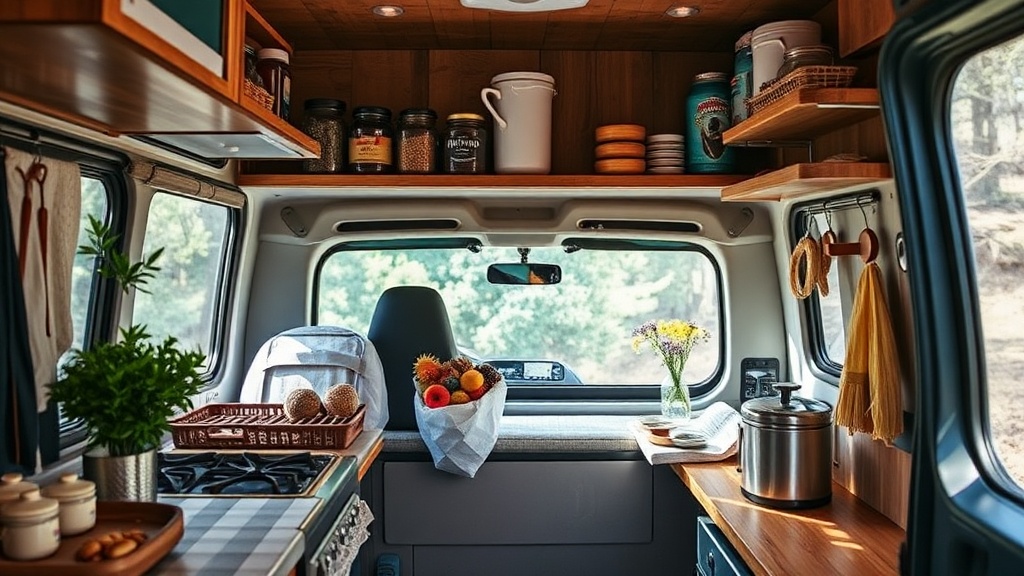
Taming the Tiny Kitchen: Organizing Your Van Life Pantry

Many travelers believe that a successful van life pantry relies on high-capacity storage bins or large, multi-compartment organizers. This is a fundamental misunderstanding of spatial geometry. In a confined mobile kitchen, volume is your enemy; weight and accessibility are your true masters. A pantry filled with bulky, half-empty containers creates a "shifting" problem where items tumble during transit, leading to broken jars and wasted space. The goal is not to maximize the amount of food you carry, but to maximize the efficiency of the space you have through density and stability.
The Hierarchy of Organization: Categorization and Density
Effective pantry management begins with a strict categorization system. You cannot simply toss bags of quinoa and cans of chickpeas into a single bin. Instead, group items by their "usage frequency" and "physical properties." This prevents the "avalanche effect" where reaching for a small spice jar causes a cascade of heavier items.
The Three-Tiered System
Divide your inventory into three distinct categories: Daily Essentials, Weekly Staples, and Occasional Luxuries. Daily essentials include items used every single morning or evening, such as coffee beans or oatmeal. Weekly staples are your base ingredients for dinners, like rice, pasta, or lentils. Occasional luxuries are the specialized items, such as a specific spice blend for a celebratory meal or a bottle of olive oil used only for certain recipes.
By separating these, you ensure that your most frequently accessed items are in the most ergonomic positions—usually between waist and eye level. For example, if you use an AeroPress every morning, that device and your coffee grounds should be in a dedicated, easy-access zone, rather than buried in a deep drawer. If you are interested in refining your morning ritual, check out our guide on essential coffee brewing methods to ensure your setup supports your caffeine needs.
Hardware and Containers: Ditch the Original Packaging
The quickest way to ruin a van kitchen is to rely on original food packaging. A box of cereal or a bag of flour is structurally unstable and takes up far more cubic volume than necessary. To achieve a professional-grade pantry, you must transition to a uniform system of airtight, stackable containers.
- Glass vs. Plastic: While glass is excellent for visibility and preventing odors, it is heavy and prone to breaking during bumpy drives on forest service roads. For a mobile kitchen, high-quality, BPA-free plastic or silicone-sealed containers like Sistema or OXO Good Grips are superior. They offer the necessary airtight seal while being lightweight and shatterproof.
- The Power of Decanting: Decant dry goods like oats, rice, and granola into uniform, stackable containers. This not only saves space but also allows you to see exactly when you are running low.
- Nesting is Non-Negotiable: Choose containers that are designed to nest within one another when empty. This is a critical tactic when you are rearranging your layout or traveling between destinations.
When selecting your containers, prioritize shapes that fit your specific shelving. If you have a narrow, deep pantry, look for rectangular containers rather than round ones. Round containers create "dead space" in the corners of your shelves, whereas rectangular containers maximize every square inch of available surface area.
Managing the "Small Stuff": Spices, Oils, and Condiments
The most chaotic part of a van pantry is often the collection of small, liquid, or highly specialized items. A single spilled bottle of balsamic vinegar can ruin your entire pantry organization and create a sticky mess that is difficult to clean in a small space. Managing these requires specialized hardware.
The Spice Strategy
Standard spice jars are too small and easily lost. Instead, use a magnetic spice rack or a dedicated spice tin system. A magnetic rack can be mounted to a metal surface or the side of a cabinet, keeping your spices off the counter and easily visible. If you prefer a drawer-style setup, use a tiered spice organizer that allows you to see the labels of the back row without moving the front row.
Oil and Liquid Stability
Liquids are heavy and prone to leaking due to the constant vibration of the vehicle. Never store large, unsealed bottles of oil or vinegar upright in a cabinet. Instead, use small, leak-proof squeeze bottles or specialized travel-sized containers. If you must carry a larger bottle of olive oil, place it inside a silicone or neoprene "bottle sleeve" to absorb shock and prevent leaks. A highly effective method is to use a small, plastic airtight bin specifically for liquids, which acts as a secondary containment zone if a seal fails.
The Logistics of Weight and Movement
In a van, weight distribution is a safety concern. A pantry that is top-heavy can affect the center of gravity of your vehicle, especially when navigating winding roads in places like the Blue Ridge Mountains or the coastal highways of Oregon. Always place your heaviest items—such as canned goods, large bags of grains, or heavy glass jars—in the lowest possible compartments.
To prevent items from sliding during transit, implement a "friction and tension" strategy:
- Non-Slip Liners: Line every shelf and drawer with a high-grip, non-slip drawer liner. This prevents jars from sliding forward when you hit the brakes.
- Soft Packing: For items that cannot be decanted, such as a bag of chips or a loaf of bread, use soft-sided mesh bags or fabric pouches. These conform to the shape of the item and can be wedged into tight gaps to stabilize the surrounding containers.
- The "Shake Test": Once your pantry is packed, perform a gentle shake test. If you hear things shifting or rattling, you have too much empty space. Fill that gap with a small cloth or a piece of bubble wrap to ensure total stability.
Inventory Rotation and Food Safety
A pantry in a van is a living system. Because you are often moving through different climates—from the humid heat of the Southeast to the high-altitude chill of the Rockies—temperature fluctuations can affect your food. A well-organized pantry must account for this variability.
Always keep a "First In, First Out" (FIFO) rotation system. When you restock your pantry at a grocery store, place the newer items at the back and move the older items to the front. This ensures you don't find a bag of expired quinoa at the bottom of your bin three months later. Additionally, be mindful of heat-sensitive items. Even if you have a pantry, avoid storing chocolate, certain oils, or delicate spices near your cooking surface or near any electronics that might generate heat.
If you find yourself needing to prepare more complex meals in more varied environments, ensure your kitchen setup is as robust as your pantry. A well-organized kitchen is the perfect companion to a well-stocked pantry. For more tips on maximizing your cooking space, see our guide on how to set up the ultimate camp kitchen.
Final Checklist for a Functional Van Pantry
Before you head out on your next long-haul trip, run through this checklist to ensure your pantry is truly "road-ready":
- Are all dry goods in airtight, stackable, and non-breakable containers?
- Are my heaviest items located in the lowest, most stable part of the van?
- Have I implemented a secondary containment system for liquids and oils?
- Is there a non-slip liner on every shelf to prevent shifting?
- Can I access my daily essentials (coffee, tea, breakfast) without moving more than two other items?
Organization in a small space is not a one-time task; it is a continuous process of refinement. As you travel and discover new ways to cook and eat, your pantry will evolve. Listen to the sounds of your vehicle—if you hear things clinking or sliding, it is time to re-evaluate your container density and stability. A disciplined pantry leads to a more peaceful, productive, and delicious journey.
Steps
- 1
Categorize Your Essentials
- 2
Utilize Vertical Space
- 3
Implement Modular Storage
- 4
Label Everything for Easy Access